Props for Photography Studio: A Practical Guide
The best props for a photography studio aren't just background filler. They're the ones that help tell a story, enhancing your subject without ever stealing the spotlight. We’re talking about everything from timeless furniture and textured fabrics to those quirky, niche-specific items that scream you and pull in your ideal clients.
Why Great Props Are Your Studio's Secret Weapon
The first step to creating truly compelling images is to stop thinking of props as simple set dressing. The right props are strategic assets, turning a straightforward photograph into a captivating story. A well-chosen item can instantly set a mood, communicate a brand's identity, or add a layer of personality that really connects with the viewer.
Think of your prop collection as a direct investment in your studio’s creative and financial health. A carefully curated inventory lets you:
- Carve out a signature style. Consistent prop choices build a recognisable aesthetic that makes you stand out.
- Attract the right clients. When potential clients see props that match their own vision—be it minimalist, bohemian, or corporate—they’re far more likely to book.
- Justify premium pricing. A unique, high-quality prop selection adds real, tangible value to your service, making it easier to support higher prices.
The Human Element
Props also play a vital psychological role during a shoot. For subjects who feel a bit awkward or self-conscious in front of the camera, a thoughtful prop can be a game-changer.
Handing someone a vintage camera, a beautiful book, or even a simple mug of tea gives them something to do, something to interact with. It instantly eases that tension. This natural engagement leads to more authentic expressions and relaxed postures, resulting in far more powerful portraits.
An Investment in Growth
Many successful photographers build their entire brand around a distinct prop aesthetic. It’s an intentional approach that proves props aren't just an expense; they're a fundamental part of your business strategy. As the demand for creative, visually engaging content keeps growing, the market is responding.
In fact, the European photography props market, including the UK, is projected to grow at a compound annual rate of 5.2% over the next decade. You can find more details in this photography props market analysis.
When you invest in a versatile collection, you’re not just buying objects. You're building a library of storytelling tools that will pay for itself across countless sessions. A single, well-chosen armchair can feature in dozens of shoots, each time helping to craft a completely different narrative.
Choosing Props That Fit Your Photography Niche
Building a versatile prop collection for your studio starts with one simple question: what story are you trying to tell? Your niche dictates that narrative, and your props are the essential vocabulary you use to speak it. Focusing on your specific genre stops you from accumulating a random pile of items and helps you build a curated, effective library that actually works for you.
The goal isn't to buy everything that catches your eye. It's to select props that support your subject without pulling focus. Think about building a core collection of timeless, adaptable pieces that will offer value across countless shoots.
Newborn and Maternity Photography Props
When it comes to newborn photography, two things trump all else: safety and texture. Props have to be gentle, completely secure, and perfectly scaled for the tiniest of subjects. Softness is everything; you're looking for materials that evoke comfort, warmth, and peace.
- Wraps and Blankets: Go for high-quality, breathable fabrics like merino wool, cheesecloth, and soft knits. Stick to neutral or muted colours that won't overwhelm the baby's delicate skin tones. These can be used for swaddling, layering, or as simple backdrops.
- Baskets and Bowls: A beautiful woven basket, a smooth wooden bowl, or a small rustic crate can create a wonderful sense of security and containment. Always make sure they are properly weighted for stability and lined with plenty of soft padding.
- Delicate Accents: Small touches like felted hearts, tiny bonnets, or subtle floral headbands can add a hint of personality without being distracting.
For newborn photography, every single prop choice must prioritise the baby’s comfort and safety above all else. Props must be spotlessly clean, sturdy, and free from any small parts or harsh materials.
Props for Brand and Portrait Photography
For brand and portrait photography, props become powerful communication tools. They help to articulate a client’s personality, their professional identity, or a brand's entire story in a single frame. The absolute key here is to choose items that feel authentic to the person in front of your lens.
A session for an author might include a vintage typewriter, a stack of classic books, and a comfortable armchair to create a scholarly, thoughtful atmosphere. On the other hand, a tech entrepreneur’s shoot could feature a sleek laptop, a minimalist desk, and modern art to convey innovation and forward-thinking. The prop choices must always serve the client’s narrative. To get deeper into this way of thinking, you can find some valuable insights in our complete guide on how to choose props that enhance your story.
Essential Product Photography Props
In product photography, the mission is simple: make the product the hero. Props are there to complement the item, highlighting its features and creating a desirable context without ever stealing the show.
It's all about adding texture and depth that make the product pop.
- Geometric Blocks: Simple acrylic or wooden blocks are perfect for adding height and creating clean, dynamic compositions that draw the eye.
- Natural Elements: Things like slate, marble slabs, dried flowers, or even sand can suggest a product's organic ingredients or an earthy, natural aesthetic.
- Reflective Surfaces: The subtle use of mirrors or glossy cards can manipulate light beautifully, adding a professional sheen and a touch of sophistication to the image.
Here’s a quick-reference table to get you started with foundational props for some common studio photography niches.
Essential Prop Checklist by Photography Niche
| Photography Niche | Essential Props | Styling Goal |
|---|---|---|
| Food Photography | Neutral ceramics, rustic wooden boards, linen napkins, vintage cutlery, fresh ingredients. | Create an authentic, appetising scene that highlights the dish. |
| Fashion/Editorial | Posing blocks, stools/chairs with character, simple backdrops, mirrors, plants. | Support the model and clothing without distracting from the fashion. |
| Newborn | Soft blankets, woven baskets, cheesecloth wraps, felted props, headbands. | Ensure safety and comfort while creating a warm, gentle aesthetic. |
| Brand/Portrait | Items related to the client's profession (laptop, tools, books), meaningful personal objects. | Tell the client's unique story and convey their personality or brand values. |
| Product | Acrylic blocks, marble slabs, natural elements (stone, wood), coloured paper backdrops. | Highlight product features, add texture, and create a desirable context. |
Ultimately, the best props for your photography studio are the ones that align perfectly with your speciality. This ensures every investment you make—whether time or money—directly supports your creative vision and your business goals.
How to Source and Hire Photography Props
Building a brilliant prop collection for your studio doesn't mean you need a blockbuster budget. The real secret is to think strategically. It’s all about mixing smart buys, savvy hires, and a little bit of creative DIY to get the job done. Each route has its own advantages, whether you're building a reliable core collection or hunting down that one perfect piece for a specific shoot.
Knowing where to look is half the battle. You can build an incredible library of assets by pulling props from all sorts of places, carefully balancing cost against quality and uniqueness.
This workflow breaks down the core process, from figuring out what you need right through to styling the final shot.
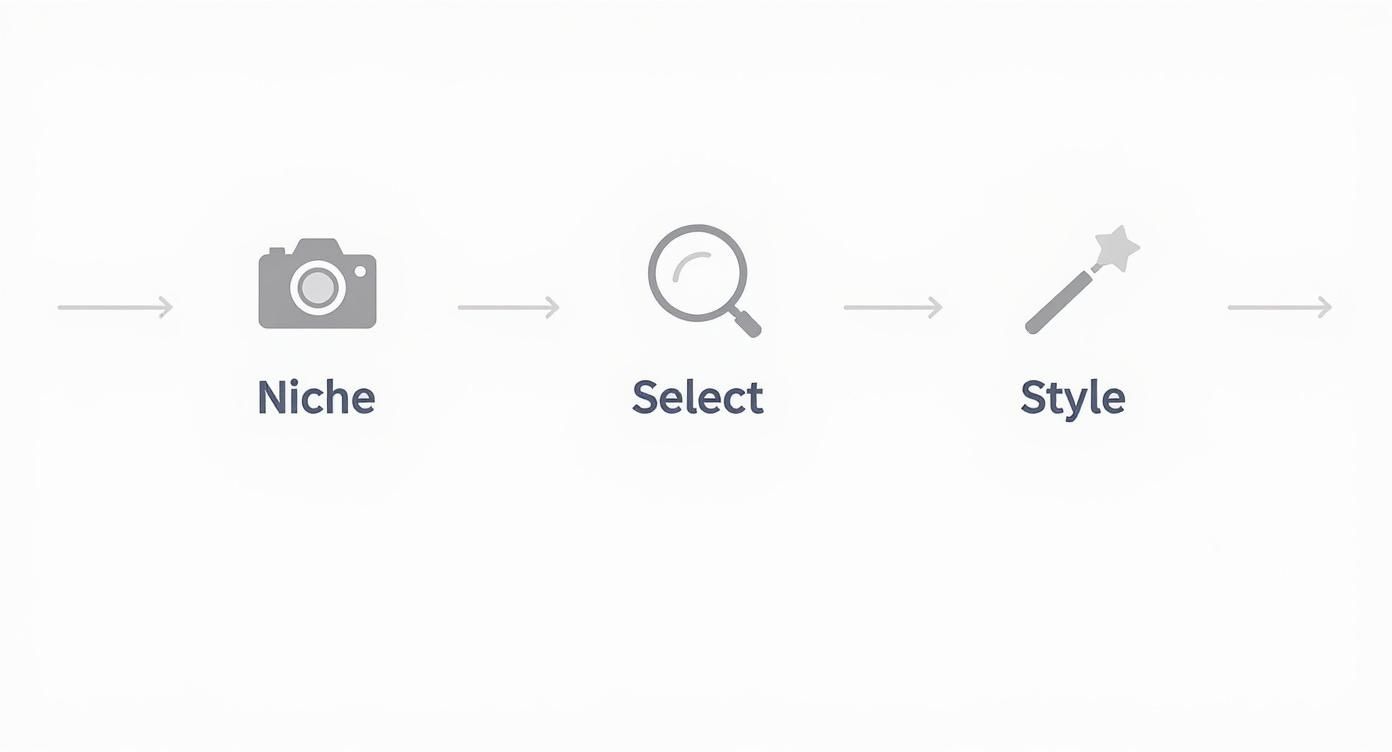
As you can see, a solid prop strategy always starts with your niche, moves into careful selection, and finishes with creative styling. It’s a clear path to a great final image.
Buying Props The Smart Way
When you buy props, you're making a long-term investment in your studio’s signature style. The trick is to hunt for items that are both versatile and durable, so you know they’ll deliver value shoot after shoot.
Charity shops and antique markets are absolute treasure troves for unique finds that have genuine character. Keep an eye out for timeless furniture, interesting textiles, and quirky small items you just can't find anywhere else. Don't overlook high-street home décor shops, either. They're fantastic for modern, clean pieces like neutral ceramics, minimalist vases, or simple cushions that can fit into countless scenes.
Remember, you're not just buying an object; you're investing in a storytelling tool. A single, well-chosen vintage armchair can become a signature piece, appearing in dozens of shoots while helping to create a different narrative each time.
The Power of Professional Prop Hire
For those big, unique, or period-specific items, hiring is almost always the most practical and cost-effective option. Need a grand throne for a fantasy-themed shoot or a full set of 1960s office equipment? This is exactly where professional prop hire companies come into their own.
Hiring gives you access to an enormous, curated inventory without the expense of buying or the headache of storing bulky items. It’s the perfect solution for one-off projects or for simply trying out new styles before you commit to a purchase. If you want to dig deeper into the pros and cons, our guide comparing DIY prop sourcing with professional prop hire is a great place to start.
Checklist for Hiring Photography Props
Using a prop hire service is usually straightforward, but a bit of organisation is key to making sure everything runs smoothly. A simple checklist ensures you don’t miss any crucial steps, from the initial booking right through to returning the items. It guarantees the props you need are ready and right for the job.
Follow these steps for a stress-free hire:
- Get a Detailed Brief Ready: Before you even pick up the phone, have a clear list of what you need. Make sure to include the style, era, colour palette, and dimensions for each item.
- Check Availability and Book: Contact the hire company well in advance, especially if you're after popular or rare props. Always confirm the booking dates and the total hire period.
- Arrange the Logistics: Clarify how you'll get the props. Will you collect them, or will they be delivered to your studio? Get a clear understanding of any transport costs involved.
- Inspect Everything on Arrival: The moment you receive the props, check them thoroughly for any pre-existing damage. Take photos of any scuffs, scratches, or issues and report them to the company immediately to avoid any disputes later on.
- Understand the Terms: Actually read the hire agreement. Pay close attention to the small print about damage, loss, and what happens if you're late returning items.
- Plan for the Return: After the shoot, clean the props as required and pack them securely for their journey back. Make sure they’re returned on time to avoid any nasty extra charges.
Styling and Preparing Props for the Perfect Shot
Getting your hands on beautiful props is half the battle, but the real magic happens in how you prepare and style them on set. I’ve seen countless shoots where a prop’s placement, lighting, or condition completely transforms an image, taking it from good to truly memorable. It’s all in the details – the small choices that build an authentic scene, guide the viewer’s eye, and make your subject pop.
Effective styling isn’t about just filling the frame. Every single prop needs to earn its place. It should be there to add depth, introduce a complementary colour, or tell a tiny piece of the story. When you thoughtfully layer different textures and elements, you create a scene that feels lived-in and genuine, not sterile and staged.
Mastering Light and Texture
Different materials play with light in completely different ways, and getting a handle on this is non-negotiable for professional-level work. A classic challenge is dealing with glare from anything metallic or glossy. The trick is to soften that light. Use a large diffuser between your light source and the prop – this scatters the light, bathing the object in a soft, even glow that kills those harsh reflections.
On the other hand, for something like a chunky wool blanket or a rustic wooden crate, you want to emphasise the texture. This is where side lighting is your best friend. Position your light source at a low angle to the side of the prop. This creates subtle shadows that pick out every little detail on the surface, adding a real sense of depth and making the object feel tactile.
Pro Tip: Don't be afraid to use hidden clamps, small wooden blocks, or even a bit of poster putty to hold props in the perfect position. This is a game-changer for hitting specific angles or stopping things from rolling or slipping. It gives you total control over the final composition.
Pre-Shoot Preparation and Safety
The final quality of your shot is directly linked to the state of your props. Before any shoot, I make time for some essential prep. Every single item, from a huge armchair down to a tiny vase, needs to be spotless – no dust, no fingerprints, no scuffs.
When props get used a lot, a bit of wear and tear is inevitable. I always keep a small repair kit on standby with a few key bits and pieces:
- Glue: For sticking small parts back on wooden or ceramic items.
- Touch-up Paint: A lifesaver for hiding minor scratches on furniture.
- Fabric Cleaner: For tackling small stains on textiles on the spot.
- Polish: To bring back the shine on metal or wooden surfaces.
When you're going for a vintage feel, one classic piece can do so much of the heavy lifting. For instance, a well-looked-after vintage record player can instantly create a nostalgic mood. But with any older items, you have to do your due diligence. Always give them a once-over for sharp edges or loose parts, especially if they’re going to be anywhere near your main subject.
Ensuring Prop Safety, Especially with Children
When you’re working with babies, children, or even pets, safety becomes the absolute number one priority. No exceptions. Every prop has to be thoroughly checked to make sure it’s completely safe and stable for them to be around or interact with.
Before these kinds of sensitive shoots, I always run through this checklist:
- Stability: Is that chair or crate going to tip? If there’s any doubt, weigh it down.
- Small Parts: Avoid anything with small, detachable bits that could be a choking hazard.
- Material Integrity: Check for splinters on wood and sharp edges on metal or plastic.
- Cleanliness: All props, particularly textiles, have to be properly sanitised before a child comes into contact with them.
This level of preparation doesn't just protect your subjects; it keeps your props in top condition, ready for the next creative vision. It’s this meticulous attention to detail that really separates the amateurs from the pros in studio photography.
Keeping Your Prop Collection Organised and Ready to Go
A messy prop corner kills creativity stone dead. Let's be honest, we've all been there – frantically searching for that one perfect item you know you own, while the clock is ticking on a shoot. A well-organised prop collection isn't just about being tidy; it's a professional system that saves you time, protects your investment, and keeps stress at bay.
When you can see what you have at a glance, preparing for a shoot becomes a smooth, creative process, not a chaotic treasure hunt. It all boils down to giving everything a logical home, no matter how much (or how little) space you're working with.
Smart Storage That Actually Works
The secret to good storage is simple: categorise everything. Grouping similar items together makes finding things intuitive and fast. Think about what makes sense for the way you work.
- Small Bits and Bobs: Clear, stackable bins are your best friend for smaller props like ceramics, fake plants, or newborn accessories. Get a label maker and use it religiously. You should be able to find what you need without having to open a single box.
- Textiles: Fabrics, blankets, and wraps need to be stored properly to avoid getting creased and ruined. Folding or rolling them neatly on shelves or in drawers is ideal. I find sorting them by colour or material makes pulling options for a client an absolute breeze.
- Bulky Furniture: For bigger pieces like chairs and tables, you just have to dedicate a specific area of your studio. A quick tip from experience: invest in a set of furniture sliders. They make moving heavy items around a one-person job instead of a back-breaking chore.
Get it all Down in a Digital Inventory
Once you've got your physical storage sorted, creating a digital inventory is the next logical step. This doesn't have to be some complex database – a simple spreadsheet will do the trick. Cataloguing your props for photography studio this way lets you track everything with minimal effort.
Your spreadsheet should have a few key columns:
- A quick description of the prop.
- A photo, so you can identify it instantly.
- Its location (e.g., "Bin 4, Shelf B" or "Behind the blue backdrop").
- A note on its current condition.
This simple digital list is a genuine game-changer. Not only does it help you find things in seconds, but it stops you from buying duplicates of things you already own. It's a system that will literally save you money.
Looking After Your Kit
Proper maintenance keeps your collection looking professional and makes it last for years. Different materials obviously need different care, but knowing the basics is crucial. Make a habit of dusting furniture, cleaning textiles according to their labels, and wiping down any hard surfaces after a shoot.
For the inevitable wear and tear, a small repair kit is a must-have. Keep some strong glue for ceramics, a few touch-up paint pens for scuffed furniture, and a good fabric cleaner on hand. It's also important to know when to let something go. If a prop is broken beyond a simple fix or just looks tired and dated, it’s time to retire it. Protecting your investments means every prop you own is always ready for its close-up.
Common Questions About Studio Photography Props
The world of props can feel endless, and when you're trying to get the perfect shot for a client, a few questions always seem to pop up. Whether you’re just starting to gather your first few pieces or you're looking to bring more intention to your collection, getting a handle on the basics is key.
Let's dive into some of the practical queries I hear from photographers all the time. My goal is to give you straightforward advice that helps you make confident, creative decisions on set.
How Do I Choose Props for a Client?
The secret here is making it a team effort. The best props feel like they belong to the story, and that story starts with a conversation. Before you even think about specific items, talk to your client about the mood and the goals of the shoot. Ask about their brand, their personal style, or the feeling they want the final images to scream. This chat is everything – it stops the props from feeling like random clutter.
Once you have a direction, pull together a quick mood board with a few prop ideas and send it over. It’s a simple visual check that gets everyone on the same page and builds excitement. It also avoids any awkward surprises on shoot day and ensures every prop is there to genuinely support their vision.
My favourite tip? I always ask clients if they have a small, meaningful object they could bring along. It could be anything – a well-loved book, a family heirloom, a piece of jewellery. Weaving in something personal can instantly make a portrait feel more intimate and real.
What's the Best Way to Start a Prop Collection on a Budget?
You absolutely don't need a massive budget to build a killer prop collection. The trick is to think smart and focus on pieces that will work hard for you across dozens of shoots.
- Start with the Neutrals: Your first investments should be in timeless, versatile pieces. Think simple wooden stools, cream-coloured ceramics, or beautifully textured linen fabrics. These are the workhorses that can adapt to almost any aesthetic you throw at them.
- Haunt the Charity Shops: Second-hand shops, antique markets, and car boot sales are absolute goldmines. You'll find unique items with real character that you just can't buy new.
- Think Like a Swiss Army Knife: Look for items that can pull double or triple duty. A set of nesting apple crates, for instance, can be used for posing, for displaying products, or just as a textured background element.
By focusing your initial spending this way, you'll build a solid foundation of core props for a photography studio that pay for themselves over and over. It's always better to have a small collection of brilliant, versatile pieces than a mountain of stuff you'll only use once. Quality over quantity, every time.
Ready to find that perfect, unique piece for your next project without the commitment of buying? At House of Props, we offer an extensive, curated collection of high-quality props for hire, from vintage furniture to specialist themed items. Explore our catalogue and bring your creative vision to life at https://www.houseofprops.uk.