A Complete Guide to Sourcing Props for Events
Event props are so much more than just decoration. They’re the essential, tactile details that can transform a space from just a room into an unforgettable world. Get them right, and you create an immersive atmosphere that brings an event’s theme to life, shaping how guests feel, interact, and remember the day.
How Event Props Forge Unforgettable Experiences
Props serve a much deeper purpose than simply filling a space. Think of them as the bridge between your event concept and the lived experience. For a guest, walking into a well-styled venue should feel like stepping into another reality. A corporate gala feels more prestigious with sleek, modern furniture; a wedding becomes instantly more romantic when framed by floral arches and vintage candelabras.
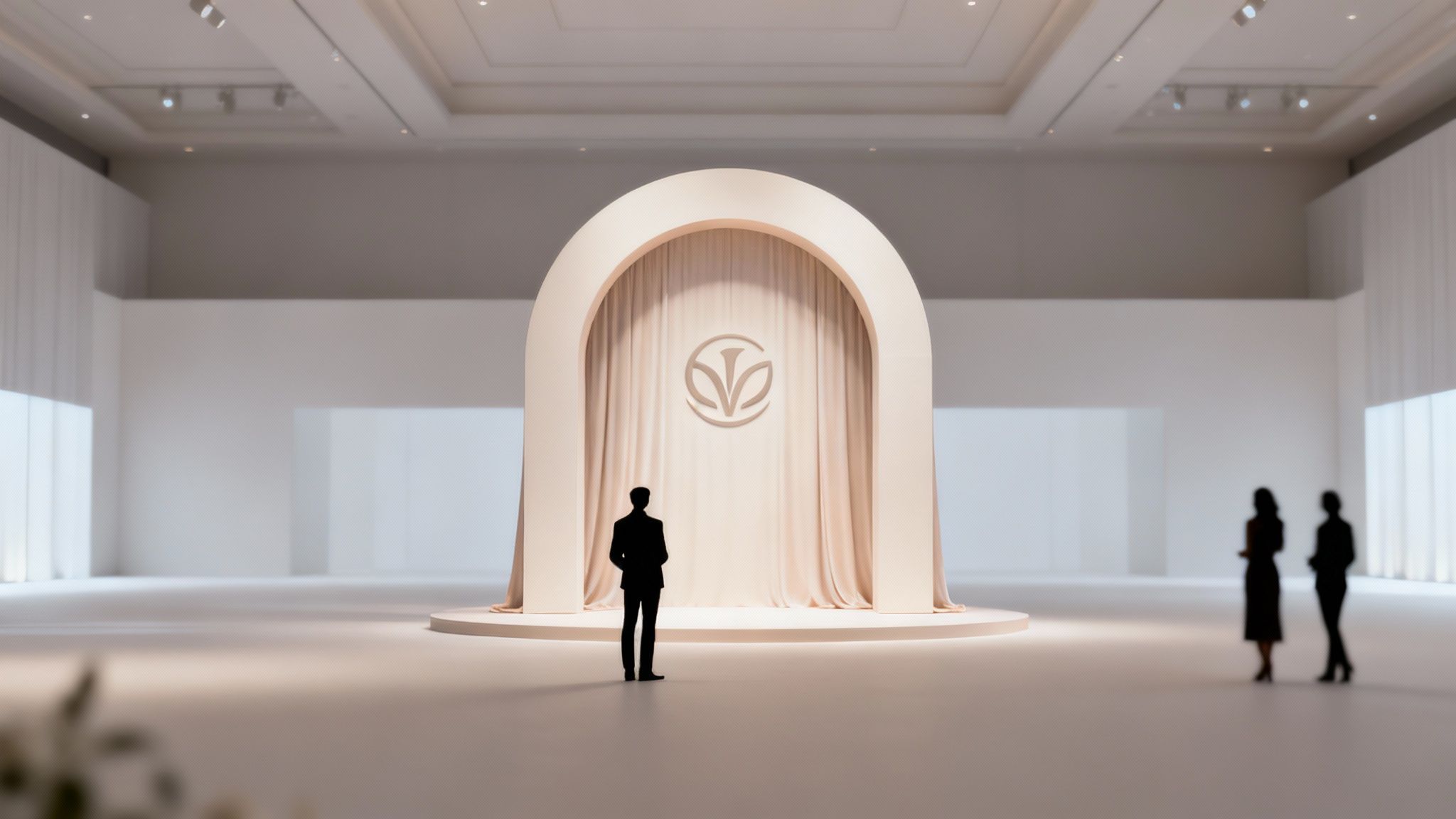
There's real psychology at play here. Strategic prop choices influence guest emotions, guide their journey through the venue, and create unique focal points that spark conversation and interaction. A quirky photo booth or a visually striking installation isn't just there to look good—it becomes a magnet for social media posts, extending your event's reach far beyond its physical walls.
The Power of Professional Prop Hire
Of course, achieving this kind of high-impact look consistently is a massive logistical challenge. Buying, storing, and maintaining a collection of props just isn't practical for most event planners, stylists, or businesses. This is exactly why so many professionals across the UK now rely on specialist prop hire companies.
Hiring gives you access to an enormous, diverse catalogue of items without the crippling expense and hassle of ownership. It unlocks incredible creative flexibility, allowing you to pick the perfect pieces for any theme you can dream up—from a medieval banquet to a futuristic product launch. It also completely removes the headaches of transport, storage, and maintenance.
This approach is becoming more vital than ever in the UK’s booming events sector. With the industry's market size valued at around £70 billion, there's a growing demand for ever-more sophisticated and memorable experiences. And in that landscape, professional props play an absolutely critical role. You can learn more about these trends and get deeper insights into the UK events market.
Key Takeaway: Props are functional tools, not just fluff. They build atmosphere, direct guest flow, and amplify your event's core message, turning a passive viewing experience into an active, immersive one.
Ultimately, using props is about crafting a narrative. Every single item should contribute to the story you want to tell, making sure every detail feels intentional and cohesive. Whether you're a seasoned planner or tackling your first big event, knowing how to choose and style props is the key to creating an experience that resonates long after the last guest has gone home. This guide will walk you through exactly how to make that happen.
Developing Your Event Prop Strategy
Great events don't just happen by accident; they're born from a clear, strategic vision. Before you even think about specific props for events, you need a solid framework. This is your roadmap, connecting your theme, brand, and objectives to the actual items that will fill your space, ensuring every single element feels intentional.
It all starts by defining the core purpose of your event. A corporate product launch, for instance, demands props that scream innovation and professionalism—think sleek metallic finishes, branded digital displays, and minimalist furniture. A rustic wedding, on the other hand, calls for a completely different visual language: reclaimed wood, soft linens, vintage seating, and warm, ambient lighting.
Answering these foundational questions clarifies your direction from the get-go, stopping a disjointed or confusing aesthetic from creeping in later.
From Mood Board to Master List
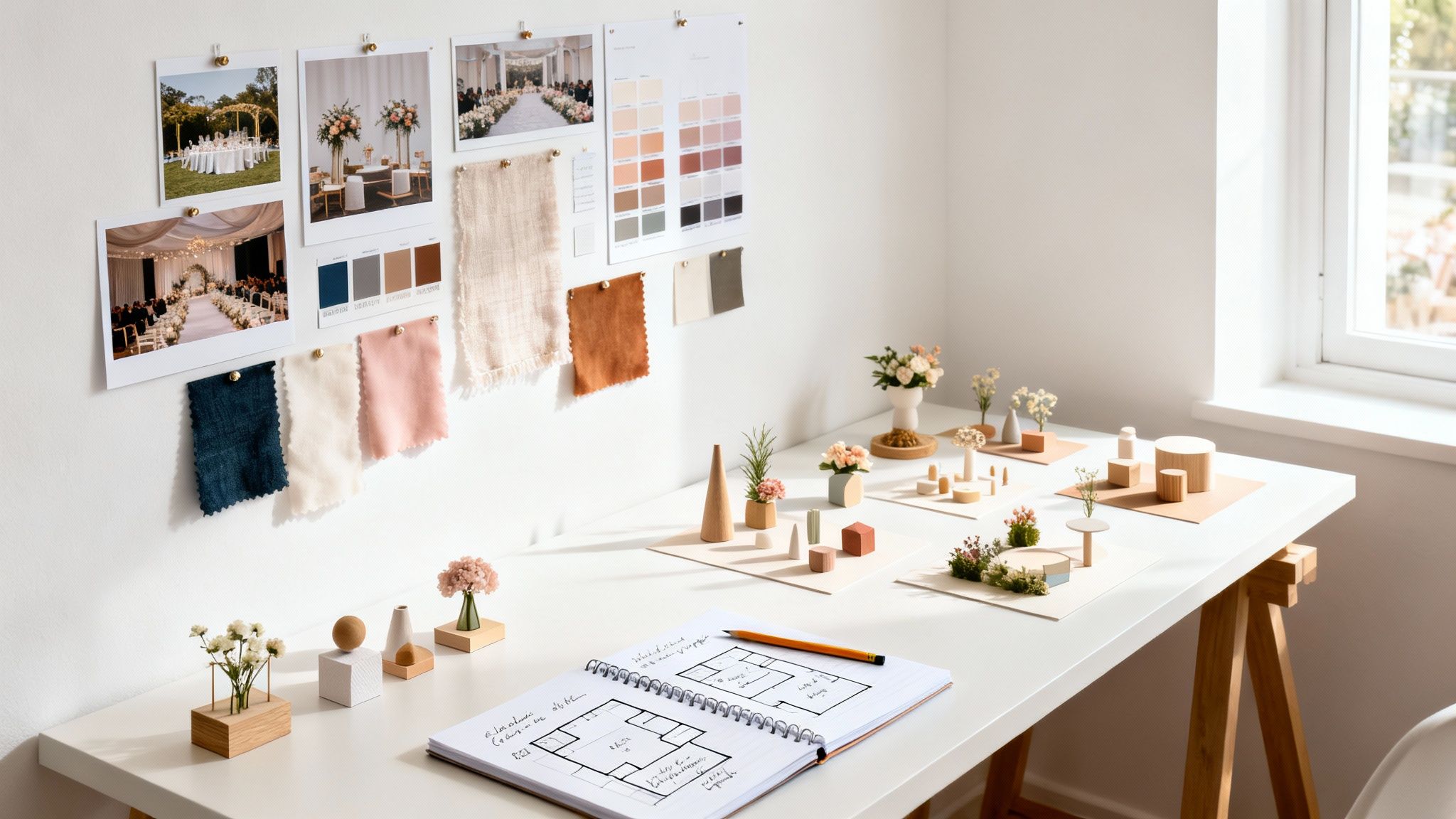
Once your purpose is crystal clear, the next job is to translate that feeling into a visual guide. This is where a mood board becomes your most valuable tool. It’s so much more than a collection of pretty pictures; it’s a tangible reference point for your entire team, guiding every decision on colour, texture, and style.
Your mood board should include:
-
Colour Palette: Pinpoint your primary and secondary colours to ensure visual harmony.
-
Textures and Materials: Include examples of fabrics, woods, metals, and florals you want to feature.
-
Key Imagery: Collect photos that capture the overall atmosphere you're aiming for.
-
Font and Graphic Styles: If branding is involved, add logos and typography for consistency.
This visual blueprint makes selecting individual props infinitely easier. From here, you can build out a detailed prop list. This isn’t a simple shopping list; it’s an organisational document. For each item, note its purpose, where it will be placed, and its dimensions. Trust me, this level of detail is crucial for avoiding that last-minute panic.
If you need a hand translating your narrative into tangible objects, you can learn more about how to choose props that enhance your story with our detailed guide.
Considering Scale and Venue Constraints
The most beautiful prop will fall flat if it’s wrong for the space. Always consider the scale of your venue. A grand, cavernous hall can swallow small, delicate decorations, meaning you'll need large-scale statement pieces to make any real impact. Conversely, an intimate setting can feel cluttered and overwhelming if it's filled with oversized furniture.
Walk through your venue with a tape measure and your prop list in hand. Take note of potential challenges like low ceilings, narrow doorways, or a lack of power sources.
Pro Tip: Pay close attention to the venue's existing décor. The best prop strategy works with the space, not against it. If the room has strong architectural features or a distinct colour scheme, your props should complement these elements rather than clash with them.
For example, a historic venue with ornate details is the perfect backdrop for antique furniture and classic candelabras. Trying to force an ultra-modern aesthetic into a space like that just creates a jarring experience for guests.
Finally, think about how props will influence guest flow and interaction. A well-placed floral arch can create a perfect photo opportunity, while strategically positioned lounge seating can encourage guests to mingle. By planning with both aesthetics and function in mind, you can craft a truly immersive environment. This meticulous planning ensures your props don’t just decorate a room—they define the entire experience.
Smart Sourcing: The Hire Versus Buy Dilemma
With a solid creative strategy in place, the next big question is a practical one: how do you actually get your hands on the props? This is where event planners hit a fork in the road that has a massive impact on budget, logistics, and the final look. Do you hire the items, or do you buy them outright?
The answer nearly always comes down to a careful balance of cost, storage, and reusability.
For one-off events or props with a very niche theme—like a vintage 1920s gramophone or an elaborate throne—hiring is almost always the smarter choice. It gives you access to high-quality, authentic pieces without the massive upfront investment or the long-term headache of finding somewhere to store them.
On the flip side, if you're sourcing items you'll use again and again for regular corporate events, such as branded lecterns or versatile seating, purchasing them could well be more cost-effective over time.
Why Hiring Props Often Makes More Sense
For most events, hiring offers an unbeatable combination of creative freedom and logistical simplicity. Professional prop hire companies provide access to a vast, curated collection of items that would be impossible for a single planner or venue to own outright.
Let's break down the advantages:
-
Cost-Effectiveness: Hiring lets you achieve a high-end look for a fraction of the purchase price. That frees up your budget for other crucial event elements like catering or entertainment.
-
Zero Storage Worries: Once the event is over, the props are simply collected. You don't need to find or pay for expensive storage space for bulky or delicate items. It's a huge weight off your shoulders.
-
Reduced Logistical Burden: Good hire companies handle the transport, delivery, and collection, taking a significant and often stressful task right off your to-do list.
-
Creative Flexibility: A hire catalogue is a creative playground. You can pick the perfect items for any theme, from a rustic barn wedding to a futuristic tech conference, without being limited to what you happen to own.
This financial and logistical efficiency is crucial in the UK's dynamic events industry. In 2023, the sector contributed £10.9 billion to the national economy, but with 47% of planners citing high prices as a key challenge, cost-effective solutions like hiring are more important than ever. Being able to source props without major capital outlay helps keep events financially viable. You can find more insights into the trends shaping the UK events industry and its growth here.
Finding and Vetting Prop Hire Companies
Choosing the right supplier is just as important as choosing the right props. A reliable partner can be the difference between a seamless setup and a nightmare event day. When you're researching UK prop hire companies, start by looking for those with a strong portfolio and genuine client testimonials.
Once you have a shortlist, it's time to ask some direct questions:
-
Delivery and Collection: What are their delivery and collection windows? Crucially, do they offer out-of-hours services for venues with strict access times?
-
Damage Policy: What's their policy on normal wear and tear versus significant damage? What are the actual costs involved if an item gets broken?
-
Condition of Props: Don't be afraid to ask for recent photos of the specific items you want to hire. A prop that looks fantastic online might show signs of wear and tear in person.
Expert Tip: Always get a detailed, itemised quote that includes delivery, collection, setup (if applicable), and VAT. Hidden fees can quickly inflate your budget, so getting total clarity from the outset is essential for keeping your finances on track.
Exploring Creative Sourcing Alternatives
While hiring is a fantastic option for most, it isn't the only one. Sometimes, a blend of different sourcing methods gets you the best result.
-
Strategic DIY Projects: For smaller, custom elements, a well-executed DIY project can add a lovely personal touch. But you have to be realistic about the time, skill, and cost involved. For a deeper dive into this, check out our guide comparing DIY vs professional prop hire.
-
Custom Fabrication: If you need a truly unique, branded centrepiece that simply doesn't exist anywhere else, commissioning a fabricator is the way to go. It's a premium option, for sure, but it guarantees a one-of-a-kind result that makes a real statement.
-
Vintage and Charity Shops: For events with a retro or eclectic theme, scouring local antique shops, flea markets, and charity shops can unearth some absolute gems. This approach takes time and a keen eye, but you can find authentic character that's hard to replicate.
Ultimately, your sourcing strategy should be as tailored as your event theme. By weighing the hire-versus-buy dilemma carefully and exploring all your options, you can make smart, cost-effective decisions that bring your vision to life without blowing the budget.
Managing Your Prop Budget and Logistics
This is where the creative vision slams into the reality of spreadsheets and schedules. I've seen it a hundred times. Pulling off a stunning event design isn't just about picking beautiful props for events; it's about the nitty-gritty planning that ensures everything shows up on time, on budget, and without any last-minute chaos.
Good operational planning is the invisible foundation holding up the entire look of your event.
First things first: you need a realistic budget. And I mean one that goes way beyond the hire fee you see in the catalogue. This is the number one place I see less experienced planners get caught out—the hidden costs can absolutely sink you if you’re not prepared.
A properly detailed prop budget is your best defence against those nasty financial surprises.
Building a Bulletproof Prop Budget
Think of your prop budget not as a single line item, but as its own mini-project with a detailed financial plan. To avoid any headaches down the line, you need to account for every single potential cost.
Here are the essentials you absolutely must factor in:
-
Delivery and Collection Fees: These can swing wildly depending on the distance, the size of the lorry required, and whether you need a specific drop-off or pick-up time outside of standard business hours.
-
Setup and Teardown Labour: Never assume the delivery driver is also your setup crew. If you need hands on deck for assembly or careful placement, that's almost always an extra—and vital—cost.
-
Damage Waiver or Deposit: Most hire companies will insist on one or the other. A damage waiver is a small, non-refundable fee covering minor accidental scrapes and bumps. A deposit is a larger, refundable sum held against any serious damage.
-
Event Insurance: Don't assume your venue's insurance covers third-party hired items. It probably doesn't. Double-check your policy and seriously consider specific event insurance to cover yourself against loss, theft, or major damage.
Key Insight: I always tell clients to allocate a contingency fund of 10-15% of their total prop budget. This buffer is a lifesaver. It gives you the flexibility to handle unexpected costs, like a last-minute prop addition or an extended hire, without blowing up your entire event budget.
Once you’ve got a firm grip on the numbers, the next step is getting your head around the paperwork. When you hire props for events, you’re signing a legal agreement. You have to know exactly what you’re signing up for. Skimming the contract is a rookie mistake.
Navigating Hire Contracts and Agreements
A prop hire contract isn’t a formality; it’s there to protect you and the supplier. Before you put pen to paper, you need to pay very close attention to a few key clauses that can have serious consequences.
Specifically, look for the sections covering:
-
Cancellation Policy: What happens if your event gets postponed or cancelled? You need to know the deadlines for making changes without being liable for the full fee.
-
Liability for Damage: The contract must clearly define what they consider "wear and tear" versus "damage." It will also state who is responsible for the props from the second they arrive to the second they're collected.
-
Substitution Clause: Some contracts give the hire company the right to swap in a similar item if your first choice becomes unavailable. Decide if you're okay with this and what the approval process should be.
Understanding these terms is non-negotiable. The best way to get a feel for the industry standard is to browse a professional catalogue of prop hire for events and familiarise yourself with how the process works from start to finish.
Mastering the Logistics Timeline
With your budget locked in and the contract signed, it’s all about logistics. A master timeline is your bible for coordinating every moving part. This document should track every single prop-related action, from the initial booking right through to the final collection.
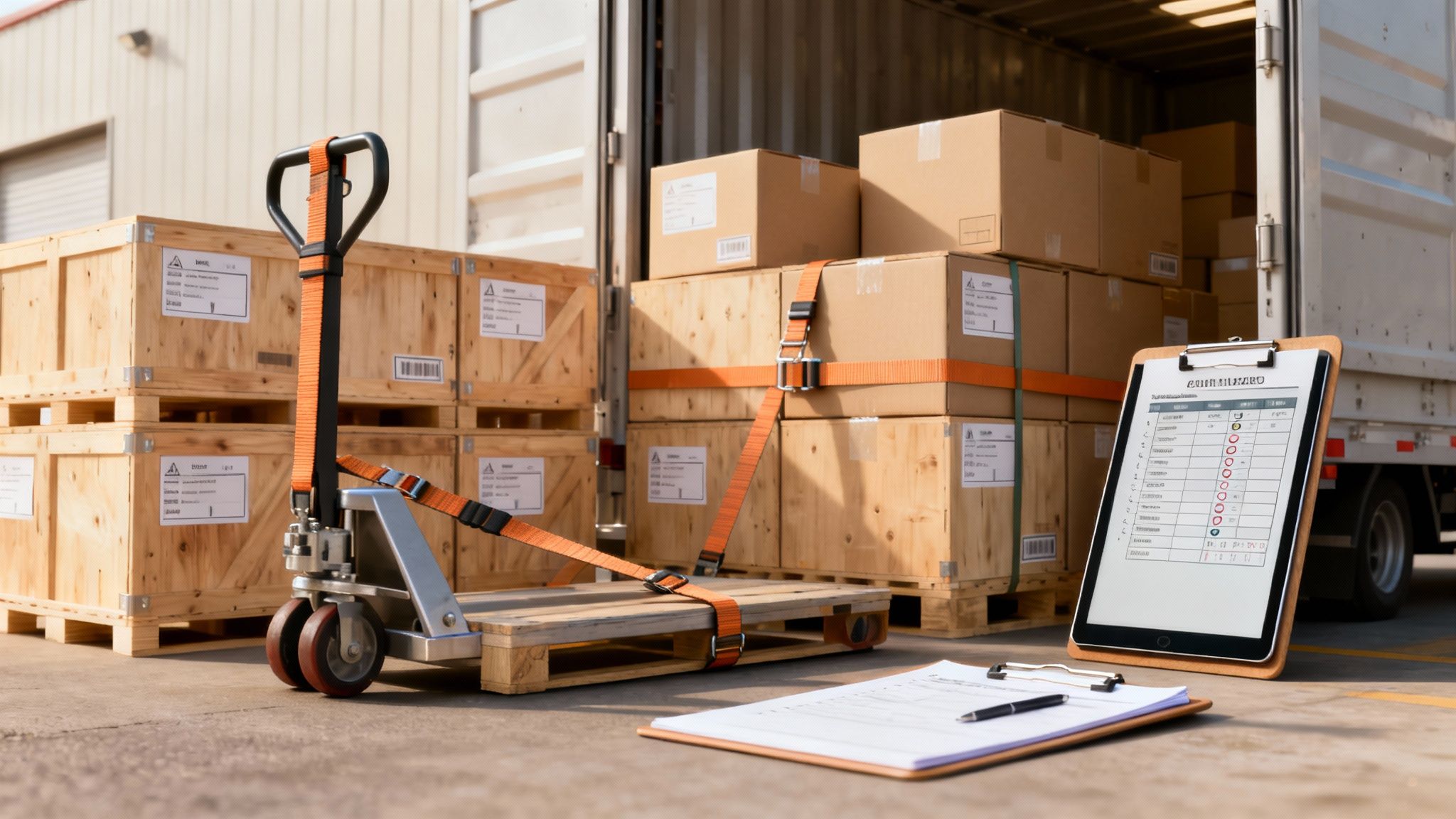
Your first call should be to the venue manager. You need firm answers on access times, loading bay availability, and any vehicle size restrictions. Can a 7.5-tonne lorry get to the door, or are you limited to smaller vans? Is there a goods lift, or will your crew be hauling that antique chaise longue up three flights of stairs?
Next, schedule your delivery and collection with the prop company, armed with all the venue's specific requirements. Always plan for delivery to happen with plenty of buffer time before setup needs to start. For collection, confirm if props need to be packed and moved to a specific spot for the drivers.
Let's take a real-world example: a large, fragile antique mirror for a wedding. Your logistics plan would need to cover specialist transport, a two-person team to carry it safely, and a pre-agreed installation point well away from any high-traffic areas. Thinking through these details beforehand is what turns potential chaos into a smooth, professional execution.
Styling and On-Site Prop Management
The lorries have arrived. The props are being carefully unloaded, and the venue is still a blank canvas. This is it—the moment where months of planning finally meet the real world. Styling props on-site is more than just logistics; it’s an art form. It's the practical skill that turns a collection of individual items into a cohesive, immersive environment that wows guests from the second they walk in.
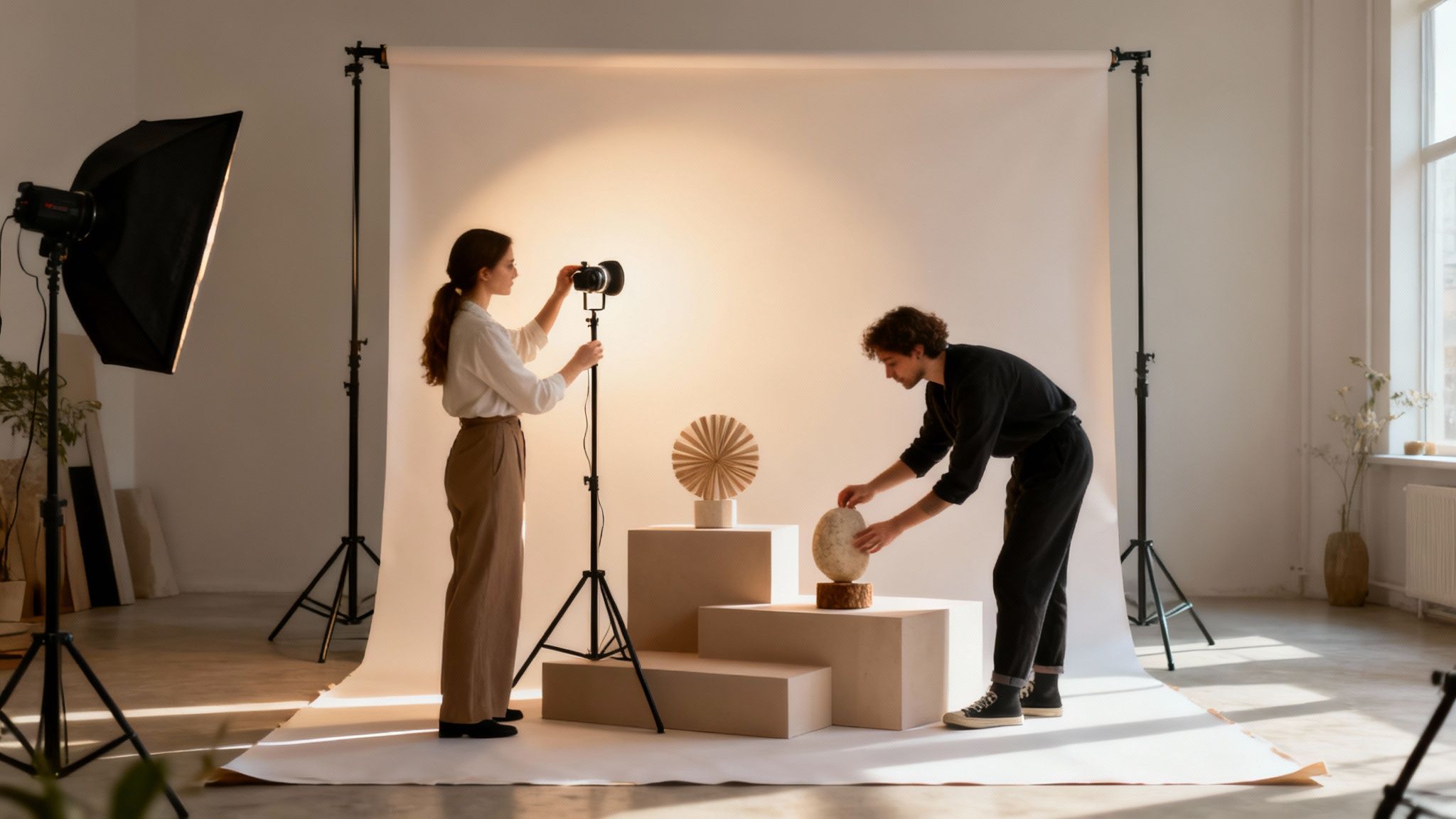
This is about bringing that mood board to life with precision and a creative eye. Every single decision, from the exact placement of a welcome sign to the angle of a spotlight on a floral arrangement, shapes the overall atmosphere. All that meticulous planning is about to pay off in a smooth, stress-free setup.
The Ground Rules of Professional Prop Styling
Great styling isn’t just about filling a space; it's about guiding the guest's eye and creating a real sense of visual harmony. It's built on a foundation of proven design principles. With a few key techniques, you can arrange your props with an expert's touch.
-
Create Obvious Focal Points: In any given area, one element should immediately draw the eye. Maybe it’s a dramatic floral installation, a branded media wall, or a beautifully styled lounge area. Arrange the supporting props around this central feature to complement it, not compete with it.
-
Use Levels to Add Dimension: A flat layout is a boring layout. You need to introduce variety in height to create visual interest. Use plinths to elevate key items, stack vintage books to give smaller objects a lift, or hang decor from the ceiling. This layering makes a scene feel rich and thoughtfully curated.
-
Lean on Lighting for Impact: Lighting is one of the most powerful—and most overlooked—styling tools in the box. Use uplighters to cast dramatic shadows on textured backdrops, pin spots to highlight a centrepiece, and coloured gels to wash a space in your event's brand colours. Good lighting can make even simple props look absolutely spectacular.
Think about how this works in practice. An inviting welcome area might feature a stylish registration desk as the focal point, flanked by plants of varying heights and lit softly to create a warm, welcoming glow.
Your On-Site Management Playbook
Beyond the aesthetics, a flawless execution hinges on robust on-site management. A clear plan empowers your team and stops last-minute panic before it starts. Before the first prop is even moved, your lead stylist or event manager needs a detailed floor plan marking the exact position of every single item.
This plan should be handed out to the entire setup crew. Everyone needs to know what they're responsible for, which prevents confusion and people tripping over each other. It’s about working smart, not just hard.
Expert Tip: Conduct a final pre-event prop check as items are being unloaded. Cross-reference everything against your delivery note to make sure all pieces have arrived and are in the condition you expected. It's far easier to sort out an issue with the hire company while their team is still on-site.
This proactive approach is crucial for staying on track. The demand for unique, personalised events is driving huge growth in the UK's party supplies market, which is closely linked to professional props. With this market forecast to top USD 400 million by 2030, client expectations for polished, memorable experiences are higher than ever. Proper on-site management ensures you deliver on that promise. You can discover key insights into the UK party supplies market and the factors driving this growth.
Preparing for the Unexpected
Even with the most detailed plan, things go wrong. A prop might not fit through a doorway, a crucial extension lead goes missing, or an outdoor decoration is threatened by a sudden downpour. A good event manager always has a Plan B.
Your on-site toolkit should include:
-
Essential Supplies: Gaffer tape, cable ties, scissors, fishing line, and a basic tool kit can solve a surprising number of problems.
-
A Weather Backup: For any outdoor elements, have a clear, agreed-upon plan for moving props undercover if the weather turns.
-
Clear Communication: Make sure your team knows exactly who to report issues to immediately. A quick, calm response can neutralise a problem before it escalates.
Ultimately, successful on-site management is a blend of creative styling and practical problem-solving. It’s about turning an empty room into a captivating experience, making sure every prop not only looks fantastic but also contributes to a seamless and unforgettable event for every single guest.
A Few Common Prop Hire Questions Answered
Even the most meticulously planned event has its curveballs. When it comes to props, there are a few practical questions that pop up time and time again. Drawing on years of experience, here are some straightforward answers to help you navigate those final, crucial details.
How Far in Advance Should I Book My Props?
My best advice? As soon as you know what you want. For high-demand items, particularly for weddings or events during peak seasons like summer and Christmas, you really want to be booking 6-12 months ahead. This gives you the best shot at securing your first-choice pieces before someone else does.
If you're planning a corporate function or something in the off-season, a window of 2-4 months is usually a safe bet. That said, it never, ever hurts to ask about last-minute availability. You might just get lucky with a recent cancellation or a new item that’s just landed in the warehouse.
What Happens If a Prop Gets Damaged?
First off, don’t panic. It happens. The moment you spot any damage, your first job is to document it. Get your phone out and take clear photos from a few different angles. Then, call the hire company straight away and let them know what’s happened.
This is exactly what your rental agreement and damage waiver are for. The contract will outline whether you're liable for the cost of repair or a full replacement. Honestly, this is why proper event insurance can be a genuine lifesaver, covering you for those unexpected accidents.
An Insight From Experience: Minor scuffs and scrapes on things like furniture or flooring are often just considered normal wear and tear. It’s the significant breaks, deep stains, or lost items that your damage deposit or insurance will need to cover. Always get clarity on what the company defines as "wear and tear" versus "damage" before you sign anything.
Can I Customise or Brand Hired Props?
This is a big one, and the answer is almost always: it depends on the company and the prop itself. The golden rule is to always get explicit, written permission before you think about making any changes, no matter how small you think they are.
Some suppliers, like us, can offer in-house customisation for an extra fee. A safer and often more effective route, however, is to use non-permanent solutions. These can look fantastic and include things like:
-
Removable Vinyl Decals: These are brilliant for adding logos or custom graphics to flat surfaces like bars, panels, or walls. They peel off without leaving a mark.
-
Custom Lighting Gobos: Projecting a company logo, a monogram, or a pattern onto a wall or floor is a high-impact way to brand a space without touching a thing.
-
Clever Signage: Simply place your own branded freestanding signs, banners, or lectern plates near the hired prop. It creates the association you want without any risk.
What Are Some Good Sustainable Prop Options?
Making sustainable choices is rightly becoming a huge priority for event planners. The good news is that the very act of hiring is far more sustainable than buying items for a single use. You’re already on the right track.
If you want to take it a step further, think about these options:
-
Living Props: Instead of faux plants, why not hire real ones? Potted trees, shrubs, and floral arrangements from a local nursery add genuine life and colour to a space and can be returned afterwards.
-
Reclaimed Materials: Actively look for props built from reclaimed wood, recycled metals, or upcycled furniture. These pieces don't just tick the eco-friendly box; they often have incredible character and a story to tell.
-
Digital Displays: Swapping printed backdrops or dozens of signs for digital screens or projectors is a game-changer. You get dynamic, customisable visuals with absolutely zero material waste.
Ready to find the perfect pieces for your next project? At House of Props, we offer a vast, curated collection of distinctive props to bring any vision to life. Explore our catalogue and request a quote today!