
Your Essential Guide to Flawless Prop Hire
Prop hire is all about renting the physical items—from furniture and décor to odd bits of specialised equipment—that bring a set or venue to life. It’s the art of finding the perfect objects to flesh out a creative concept, making sure every last detail clicks with your overall vision.
Bringing Your Vision to Life with Prop Hire
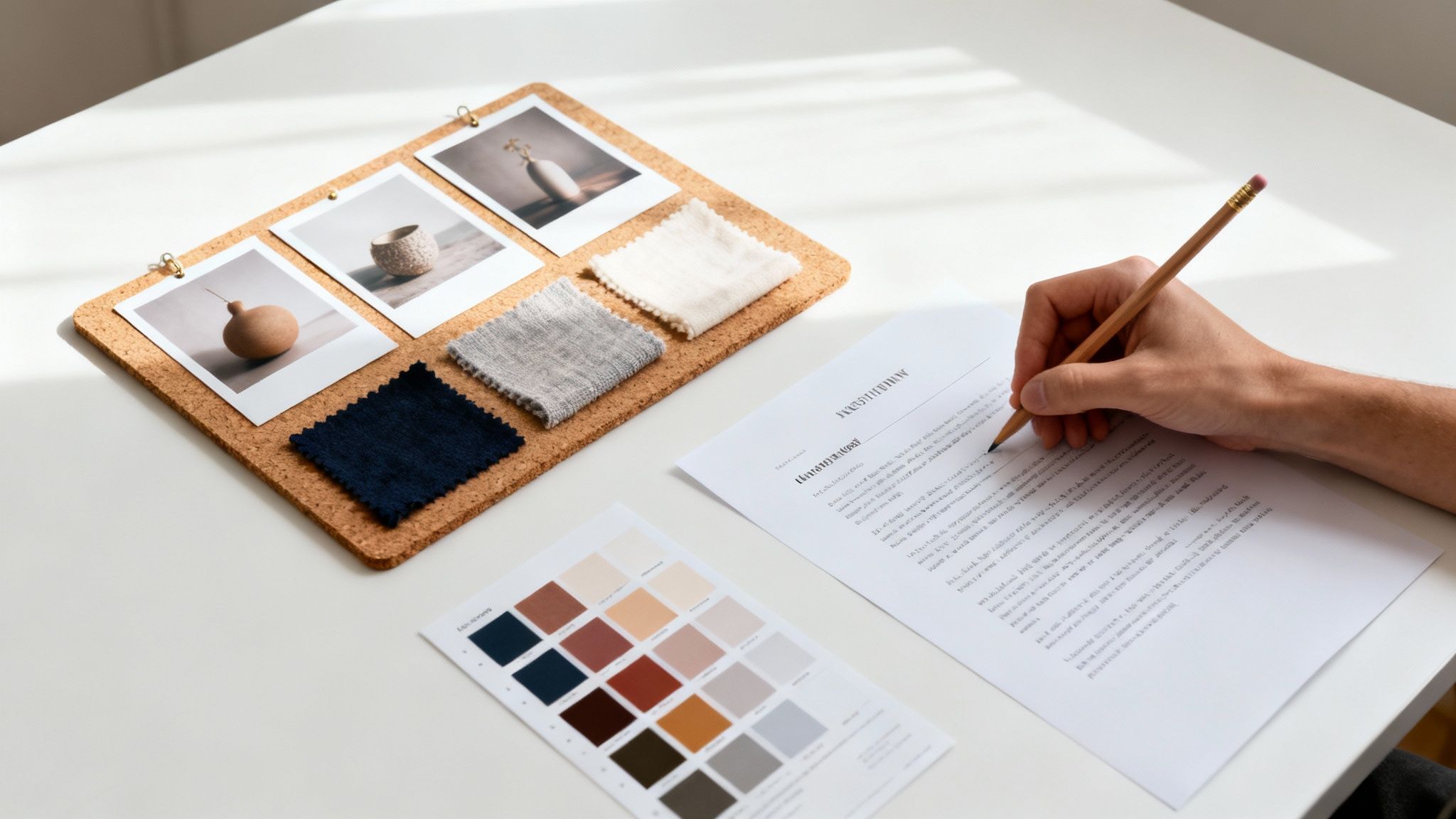
Before you even think about scrolling through a prop catalogue, the real work begins. You have to get the ideas out of your head and onto paper in a way that someone else can understand. A smooth prop hire experience is built on a foundation of crystal-clear communication, which means starting with a detailed brief and a compelling mood board.
These documents are your project's roadmap. They guide every decision and ensure your prop house knows exactly what you need.
Without that clarity, you're just gambling with time and money, risking a delivery of items that just don't fit the scene. Think about the difference between sourcing props for a gritty, 1980s police drama versus a whimsical, fairytale wedding. One needs functional, period-accurate office furniture and stacks of mundane paperwork; the other demands ornate, soft-textured pieces. Each has its own distinct visual language.
Crafting a Brief That Gets Results
Your brief is the practical, no-nonsense document. It's the "what, where, and when" of your project, outlining all the functional requirements. A really effective brief doesn't just list items; it gives the context that helps a prop supplier like me make informed recommendations that you might not have even thought of.
A solid brief should always include:
-
Project Overview: A quick summary of the production, event, or shoot.
-
Key Scenes or Areas: Pinpoint the specific spaces you're dressing (e.g., "detective's office," "wedding reception lounge").
-
A Detailed Prop List: Be as specific as you possibly can. Don't just ask for "a chair"—ask for "a distressed leather wingback armchair."
-
Functionality Notes: This is crucial. Mention if an actor needs to interact with a prop, like a phone that has to ring or a drawer that must open on cue.
-
Logistical Details: Include dates, the venue address, and any access restrictions we need to know about.
Building a Powerful Mood Board
While the brief handles the logistics, the mood board communicates the feeling. It's a visual collage that captures the atmosphere, colour palette, and overall style you're aiming for. This is where you convey the aesthetic that words alone just can't capture.
A well-curated mood board is the single most effective tool for aligning your creative vision with a prop house's inventory. It bridges the gap between abstract ideas and physical objects, ensuring everyone is working towards the same visual goal from day one.
For instance, a mood board for a futuristic sci-fi film might be full of sleek metallic textures, cool blue and silver tones, and images of minimalist architecture. In contrast, a board for a vintage-themed event would showcase warm sepia tones, aged wood, and classic patterns. This visual reference is absolutely invaluable.
To go a bit deeper, check out our guide on how to choose props that enhance your story for more insights from my experience. Taking the time to get your brief and mood board right isn't just prep work—it's the first and most important step toward a seamless prop hire process.
Budgeting and Selecting the Perfect Props
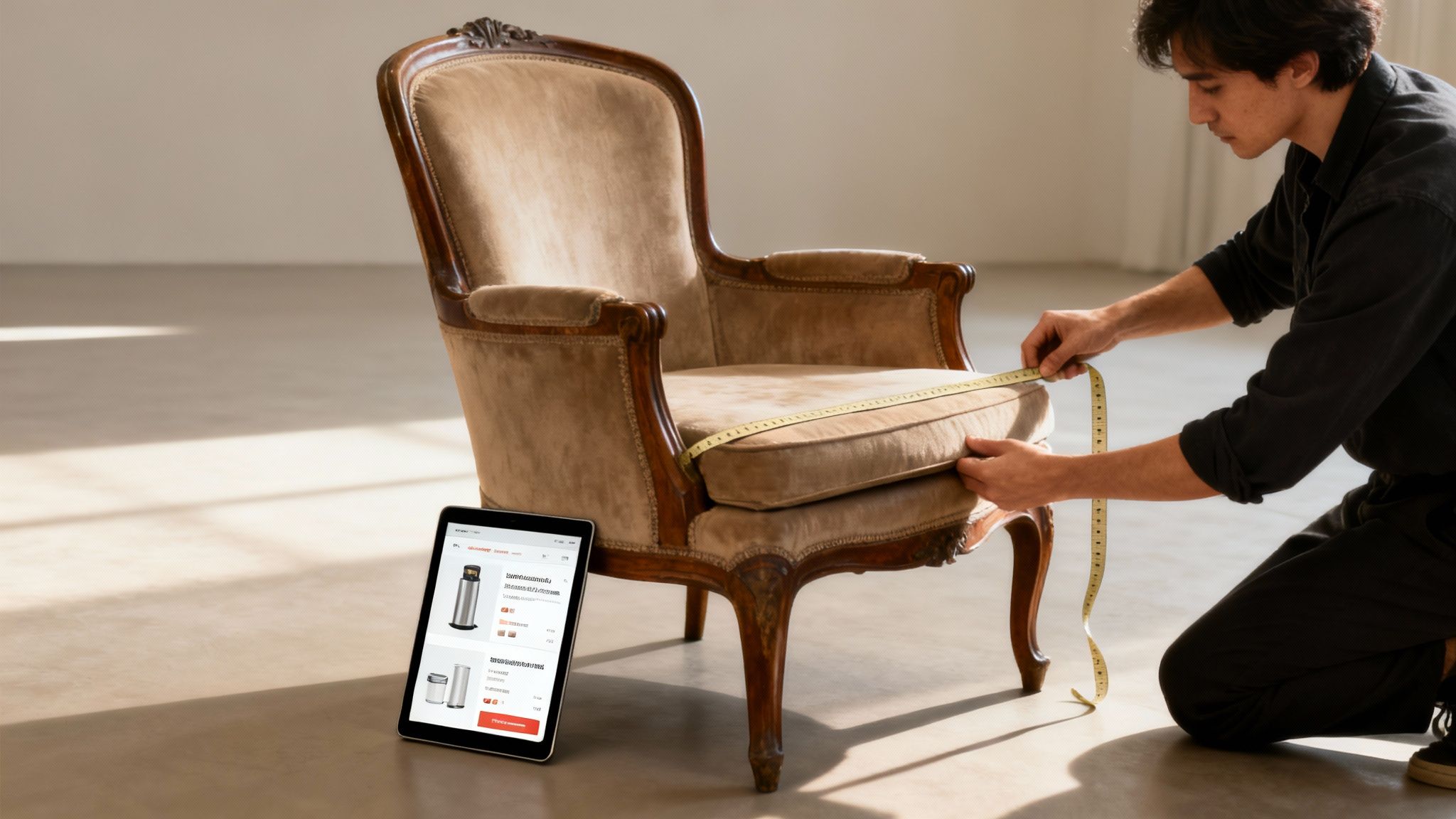
With a clear vision in hand, it’s time to get down to the brass tacks: money and the items themselves. A successful prop hire hinges on a realistic budget, and from my experience, this is where things often go sideways. Many teams fixate on the weekly rental fee and completely forget the associated costs, leading to nasty surprises.
Your budget needs to be comprehensive. Don't just look at the price tag on the prop; you have to factor in everything that comes with hiring professional pieces.
Accounting for Every Penny
A properly planned budget isn't just about avoiding stress; it gives you creative breathing room. To make sure you’re covered, you have to allocate funds for the less obvious costs that are always part of the process.
Here’s the essential checklist I run through:
-
Rental Fees: The core cost for the props over the agreed hire period.
-
Delivery and Collection: Transport can be a huge expense, especially for big, delicate, or numerous items. Never underestimate it.
-
Insurance: This is completely non-negotiable. You need proper cover for loss, damage, and public liability.
-
Damage Deposit: A standard refundable amount held by the prop house against any potential dings or breakages.
-
Contingency Fund: This is my golden rule. A buffer of 10-15% of your total prop budget is a smart safety net. It covers unexpected needs or those inevitable last-minute changes of heart from the director.
The Art of Selecting the Right Pieces
Now for the fun part—choosing the props. Whether you’re scrolling through an online catalogue or, my personal preference, walking the aisles of a warehouse, your brief and mood board are your North Star. This is where the vision becomes tangible.
The selection process can vary wildly. A historical drama demands painstaking authenticity; the specific style of a telephone or the fabric on a chair can make or break a scene’s credibility. Get it wrong, and the audience feels it, even if they don’t know why.
On the other hand, a themed corporate event gives you more leeway. It’s more about creative interpretation, where the feel of an item outweighs its historical accuracy.
The best way to approach selection is with a blend of precision and pragmatism. Know exactly what you need for authenticity, but stay open to the creative alternatives a prop house expert might suggest. They see the inventory every day and can often pull out a gem you’d never have considered.
The UK's creative sector is a powerhouse, which is a massive advantage. In 2023, the European prop hire market was valued at around $1.2 billion, and a huge chunk of that is driven by Britain's film, TV, and theatre industries. This vibrant market means there’s a staggering variety of props out there for almost any creative need.
Hire It, or Make It?
During your search, you'll inevitably hit a crossroads: should you hire an existing item or commission a custom-made one? The decision usually comes down to three things: budget, timeline, and specificity.
Hiring is almost always faster and more cost-effective. No question. But if a prop is absolutely central to your story and nothing off-the-shelf quite works, commissioning might be the only way forward. Before you commit, seriously consider if an existing item can be adapted. Do you really need something built from scratch?
Our guide on DIY vs professional prop hire dives deeper into this, helping you weigh up the pros and cons for your specific project.
From Quotes to On-Site Safety Checks
Once your moodboard is signed off and your prop list is locked in, the practical work really begins. This is where your creative vision starts the journey to becoming a physical reality, and it all kicks off with getting accurate quotes.
This isn't just a box-ticking exercise to find the cheapest option. It’s about digging into the detail to understand exactly what you’re paying for. Get this wrong, and you risk a serious budget blowout down the line.
When you reach out to prop hire companies for quotes, don't hold back. Give them your full, detailed brief. A vague request only ever gets a vague quote in return, so be crystal clear about hire duration, delivery specifics, and any special handling needs. This level of detail forces suppliers to be transparent and precise with their pricing.
Decoding Your Prop Hire Quotes
When the quotes start landing in your inbox, resist the urge to just scan for the final number at the bottom. A professional quote should always be itemised, giving you a clear breakdown of every single cost. This is your chance to compare offers like-for-like and, crucially, spot any potential hidden fees that could catch you out.
Here's a quick checklist to help you compare quotes from different prop hire companies and map out all the potential costs you need to consider.
Prop Hire Quote Comparison Checklist
| Cost Component | Company A | Company B | Notes / Considerations |
|---|---|---|---|
| Item Rental Cost | The base hire fee for each prop. Is it per day or per week? | ||
| Delivery Charge | Is this a flat fee or based on mileage? Does it include a driver only? | ||
| Collection Charge | Often the same as delivery, but always check. | ||
| Crew / Porterage | Is crew for loading/unloading included or an extra cost? | ||
| Damage Waiver / Insurance | A non-refundable fee covering accidental damage. Essential. | ||
| Security Deposit | A refundable amount held against major damages. How/when is it returned? | ||
| VAT | Is it included or excluded? A 20% surprise is never welcome. | ||
| Out-of-Hours Surcharge | Are there extra fees for weekend or late-night delivery/collection? | ||
| Minimum Spend | Does the company have a minimum hire value you need to meet? | ||
| Total Cost |
A lower headline price might look tempting at first glance, but a slightly higher quote that bundles in comprehensive insurance and crew for transport could easily prove more cost-effective in the long run. Always do the maths.
Measure Twice, Hire Once
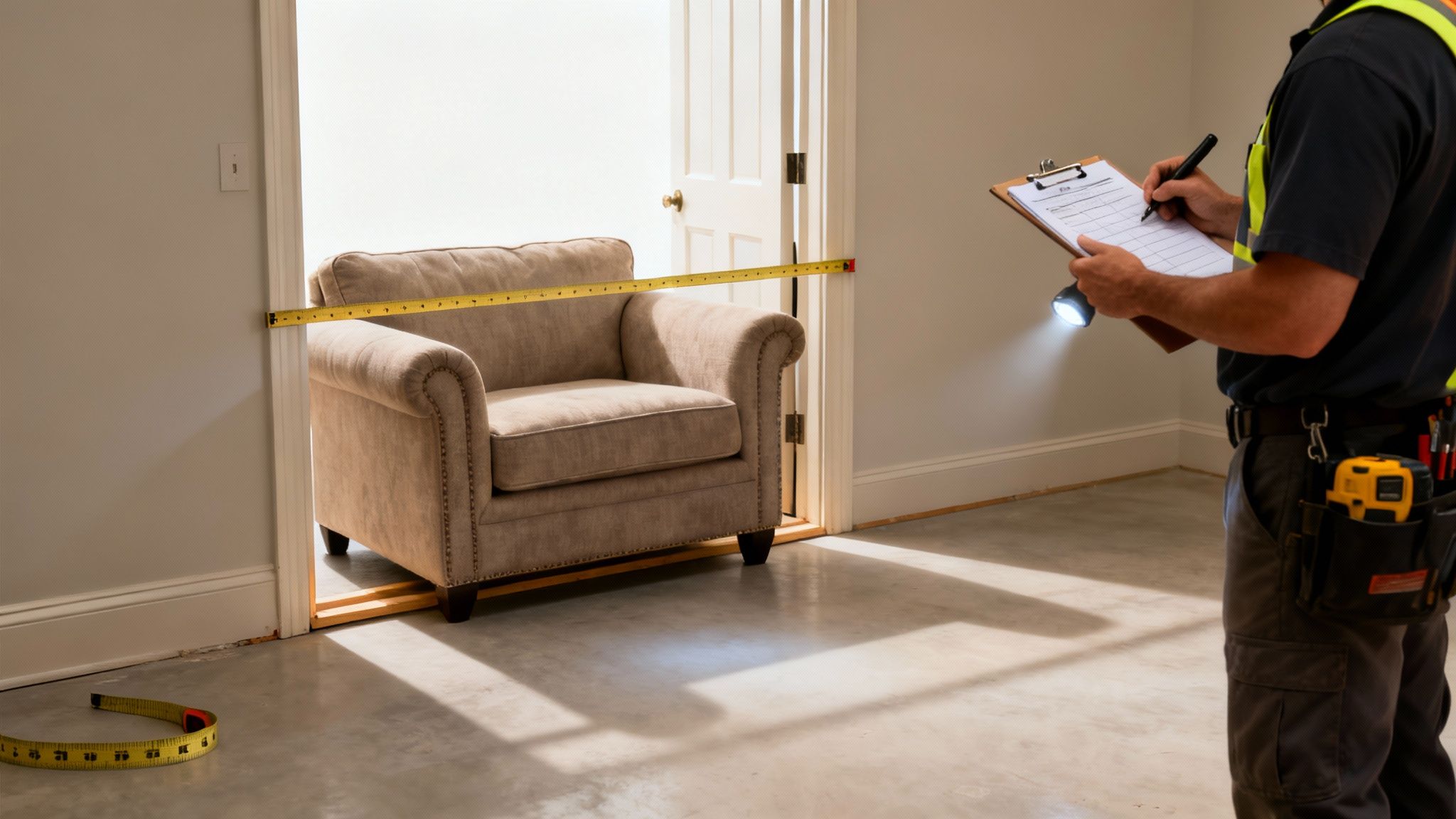
Let’s talk about one of the most common—and entirely avoidable—disasters in the world of prop hire: forgetting to check your dimensions. I’ve seen it happen. There is absolutely nothing worse than that sinking feeling when a beautiful vintage sofa, the absolute perfect piece for your set, simply will not fit through the venue's doorway.
It’s a costly, time-wasting, and frankly embarrassing mistake to make.
Before you confirm a single large item, get a tape measure and visit your venue. Meticulously check every single access point: doorways, lifts, stairwells, and any tight corridors. Then, communicate these constraints clearly to the prop house.
Never, ever rely on guesswork. Get the prop's dimensions from the supplier’s catalogue and compare them directly against your on-site measurements. This simple, ten-minute check can save you hours of logistical nightmares and wasted money on the day of the shoot or event.
Conducting On-Site Safety Checks
When the props finally arrive and are delivered to site, your job isn't over. Safety is completely non-negotiable, especially for items that actors, models, or guests will be interacting with. A quick but thorough inspection is essential before anything is placed on set or used at an event.
Your on-site checks should cover a few key areas:
-
Stability: For any furniture like chairs, stools, and tables, give them a good nudge. Make sure they are sturdy and don’t wobble dangerously.
-
Sharp Edges: Carefully run your hands over surfaces to check for splinters, exposed nails, or sharp metal edges that could snag costumes or cause injury.
-
Electrical Integrity: For any items that need to be plugged in, like lamps or vintage tech, do a visual check of the plugs and cables. Look for any signs of fraying, wear, or damage. If you have even the slightest doubt, don't use it.
This proactive approach ensures that every single piece you hire is not only visually perfect but also completely safe and functional for everyone involved in your production.
Getting the Details Right: Logistics and the Fine Print
This is where it all comes together. You can pick the most incredible props, but if you drop the ball on logistics and paperwork, a smooth hire can quickly turn into a nightmare. This is the nitty-gritty, the stuff that happens after the creative choices are made, and honestly, it’s what separates the pros from the amateurs.
Getting props from the warehouse to your set isn't just about booking a van. You're coordinating with venue managers who have ridiculously specific delivery windows, making sure the vehicle is big enough for that antique wardrobe, and confirming someone is actually there to receive it. One small slip-up here, and you're looking at delays, extra costs, and a whole lot of stress.
Once those props are on your turf, they're your responsibility. This is a big one. You’ve got to follow the handling instructions from the prop house to the letter, especially for anything old or fragile. This isn’t just about being careful; it’s about respecting the items and the agreement you've signed.
Don't Skim the Contract – Ever
The single most important document in this whole process is your hire agreement. It’s tempting to just scan and sign, but I've seen that mistake cost productions thousands. You need to cut through the jargon and know exactly what you're agreeing to. This paper is your rulebook, covering everything from what happens if something gets broken to how you get your deposit back.
Take a few minutes and look for the key clauses. They're usually pretty standard, but the details matter.
-
Liability Coverage: If someone trips over a prop and gets hurt, who’s on the hook? Make sure you know where your responsibility begins and ends.
-
Damage Waivers: This is a non-refundable fee that acts like a bit of insurance against accidental damage. But it's not a free pass. Understand its limits and what it doesn't cover.
-
Deposit Terms: Be crystal clear on what you need to do to get your security deposit back in full. Know the timeline and how they assess for damages when the props are returned.
Ignoring these terms is a huge gamble, especially for big productions or public events where things naturally get more wear and tear. For more on finding the right pieces in the first place, our guide on prop hire for events has some solid advice.
Treat your hire agreement like a script for your project's financial and legal safety. Reading it properly before you sign is the best risk-management you can do.
Looking After the Goods
While the props are with you, you've got to be meticulous. It’s more than just "don't break it." Think about where things are being stored and how they’re being used. That gorgeous antique dining table can't be left out in the rain overnight, and that velvet chaise longue needs protecting from coffee spills.
Before anything goes back to the prop house, do yourself a favour: take photos. Lots of them. Match them up with the condition report you signed when they arrived. This creates a bulletproof record and is your best defence against any disputes over whether that scratch was already there. It's a simple step that protects your deposit and, just as importantly, your reputation.
Avoiding Common Industry Pitfalls
Learning from other people's mistakes is the fastest way to make sure your project runs like a well-oiled machine. Over the years, I've seen a few costly errors pop up time and time again. Knowing what they are puts you in a much stronger position to manage your project like a seasoned pro.
Here are the most frequent mistakes to watch out for:
-
Underestimating Logistics: It’s easy to get caught up in the creative side of things and forget the practicalities. Always confirm venue access times, loading bay restrictions, and whether you’ll need extra hands for heavy lifting well in advance. Trust me, you don’t want to discover the service lift is out of order when a grand piano arrives.
-
Poor Communication: Vague emails and missed calls are a recipe for confusion and delays. Keep a clear, consistent line of communication open with your contact at the prop house. Get every important detail confirmed in writing to avoid any "he said, she said" moments later on.
-
Ignoring the Condition Report: When the props arrive, the temptation is to get them straight onto set. Never skip the check-in process. Go through each item meticulously against the condition report you were given, and take your own photos of any pre-existing damage.
Failing to document a prop's condition on arrival is the number one cause of deposit disputes. A few photos and a signed document can save you a world of time, money, and stress when it’s time to return everything.
Creating a Proactive Timeline
A simple timeline, worked backwards from your event or shoot date, will prevent most of these issues from ever happening. Set firm deadlines for each key stage and stick to them.
Your Timeline Checklist:
-
8-10 Weeks Out: Finalise your creative brief and mood board.
-
6-8 Weeks Out: Start researching prop houses and shortlisting the items you need.
-
4-6 Weeks Out: Send out your brief and start comparing detailed quotes.
-
3-4 Weeks Out: Confirm your final list and sign the hire agreement. This locks in your items.
-
1-2 Weeks Out: Nail down all the delivery and collection logistics with both the venue and the prop house.
-
Delivery Day: Conduct that thorough check-in of every single item.
-
Collection Day: Make sure all props are gathered, checked, and ready for pickup as agreed.
This isn't a rigid formula, of course. You'll need to adapt it to the scale and complexity of your project. The real goal is to build in enough breathing room to make considered decisions, manage the paperwork without rushing, and solve logistical puzzles long before they become emergencies.
Your Top Prop Hire Questions Answered
Even the most organised production has last-minute questions. After three decades in this business, I've heard them all. Getting a quick, straight answer can be the difference between a smooth shoot and a costly headache. Here are the honest answers to the questions that pop up time and time again.
How Far in Advance Should I Book My Props?
For standard, everyday items, giving yourself 4-6 weeks is a comfortable window. It’s enough time to browse, get your quotes in, and sort out the logistics without that last-minute panic.
But if you need something special, that timeline changes. Drastically. For those rare, period-specific, or highly sought-after props—the kind that can make or break a scene—you need to start the conversation 2-3 months ahead. That extra time is crucial for sourcing and securing those hero pieces everyone wants.
What Happens if a Prop Gets Damaged on My Watch?
First thing's first: call the prop hire company immediately. Tell them exactly what happened. Whatever you do, don't try to fix it yourself unless they give you explicit, written permission. You could end up making it worse.
Your rental agreement will lay out the process, but typically, the cost of the repair or replacement comes out of your security deposit. If the damage is more expensive than the deposit, you’ll be invoiced for the difference. This is exactly why you need to be crystal clear on the insurance and damage waiver options before you sign anything.
A quick note on the difference: a damage waiver is a non-refundable fee you pay upfront to cover accidental damage up to a certain amount. It’s a bit like buying peace of mind. A security deposit is a refundable chunk of money held against any potential damage, which you get back in full if the props are returned in one piece. Always ask which system your hire company uses.
Can I Paint or Alter a Prop to Match My Theme?
The answer is almost always a firm "no." Hire agreements are very clear about not allowing permanent alterations like painting, drilling holes, or reupholstering. These pieces are valuable assets that need to be kept in their original state for the next production.
If a customisation is absolutely essential to your creative vision, you have to bring it up with the prop house well in advance. Some of the bigger outfits have their own workshops and might agree to modify an item for you, for an extra fee. More often, they'll be able to suggest an alternative prop that already fits the bill.
And this is critical: if any modification is approved, get it confirmed in writing. It protects you, and it protects the prop house.
Ready to find the perfect pieces for your next project? With over 30 years of experience, House of Props offers a vast and diverse collection to bring any creative vision to life. Explore our catalogue and request a quote today.