
A Creative’s Guide to Furniture Hire
In a nutshell, furniture hire lets you rent pieces for a set amount of time. It gives you instant access to a massive range of styles without the commitment—or the price tag—of buying everything outright. For anyone working in film, TV, theatre, or events, it’s an absolute game-changer, helping bring ambitious ideas to life on schedule and on budget.
Why Creatives Choose Furniture Hire
Imagine a film director who owns a small troupe of actors. For every single film they make, they're stuck with the same faces, the same talents. It's limiting. Now, picture that same director having access to a casting agency with thousands of actors, each perfect for a specific role—a seasoned Shakespearean for a period drama, a fresh face for a modern comedy.
That's exactly what furniture hire does for set decorators, photographers, and event planners. It’s not just about renting a chair; it’s about casting the perfect character for your scene.
Think of it as a limitless design toolbox. Instead of being stuck with a small inventory, you get the freedom to pick from huge collections spanning every era and aesthetic you can think of. Need an authentic Victorian chaise longue? A sleek mid-century modern sideboard? A rustic farmhouse table? Hiring makes it possible. This kind of access is what lets you build believable worlds and create truly evocative atmospheres. You can dive deeper into how props shape these environments in our article on the role of prop hire in TV production.
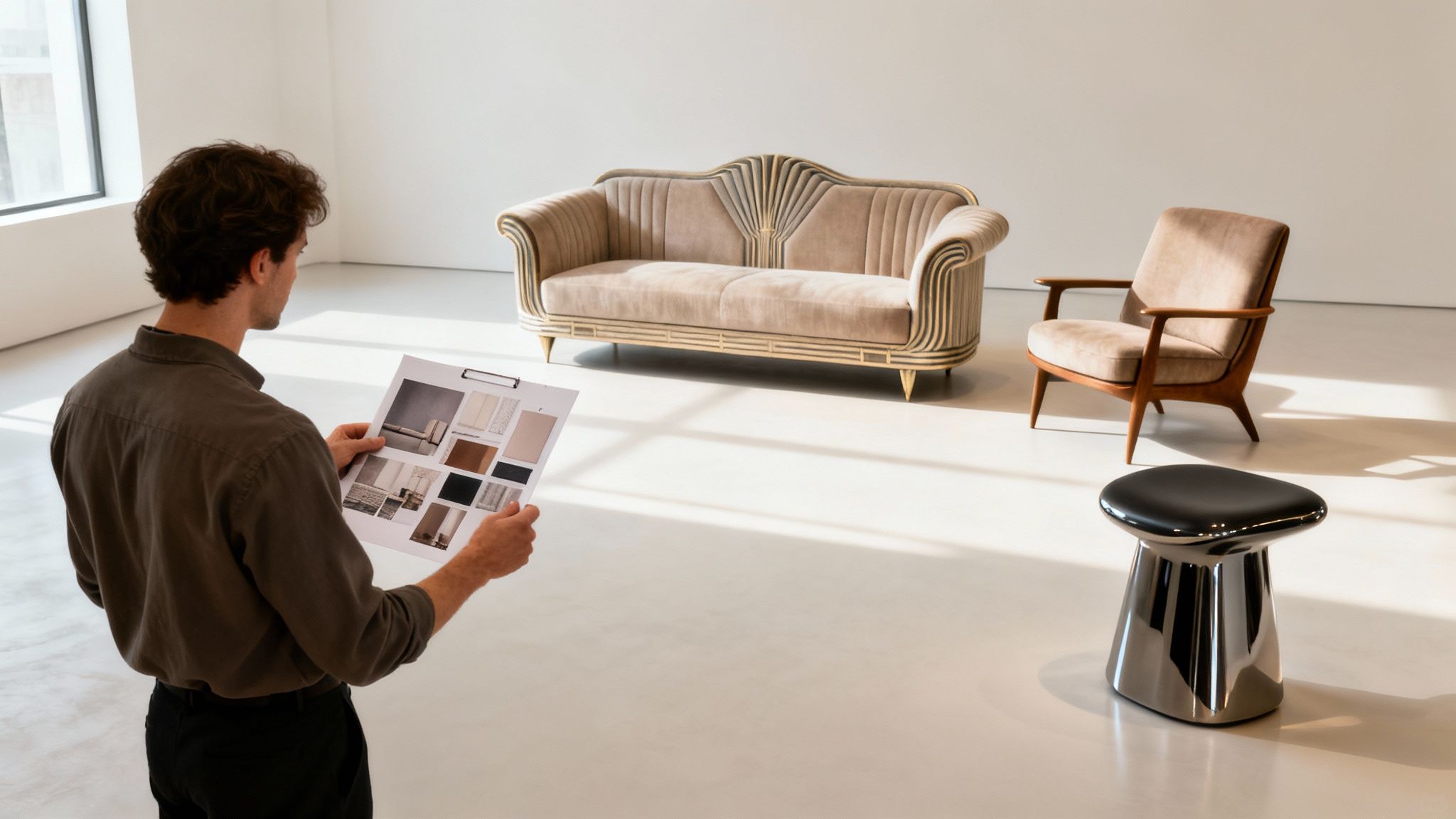
A Creative and Financial Advantage
Beyond the sheer creative freedom, hiring just makes good sense. The alternative—buying everything—is a logistical nightmare riddled with hidden costs. You've got transport, long-term storage, maintenance, and eventually, disposal to worry about. All of that eats up time and drains a production's budget.
Hiring transforms a potential capital expenditure into a manageable operational cost. It eliminates the long-term burden of ownership, allowing creative teams to allocate their budget towards what truly matters—the final look and feel of the project.
This isn't some niche industry secret; it's part of a bigger shift towards flexible, on-demand solutions. The numbers back it up, too. The UK furniture rental market was worth a staggering USD 2,380.1 million in 2022 and is projected to hit USD 4,258.6 million by 2030. That growth is fuelled by industries where project needs can change overnight and agility is everything.
Ultimately, furniture hire is a powerful creative enabler. It empowers professionals to:
-
Achieve Specific Aesthetics: Perfectly match furniture to any period, style, or brand identity without compromise.
-
Maximise Budget Efficiency: Avoid the high upfront cost and long-term expenses of buying, insuring, and storing items.
-
Adapt to Tight Deadlines: Quickly source and secure the right pieces, even for projects with a rapid turnaround.
-
Enhance Visual Storytelling: Use furniture to build character, establish tone, and create truly immersive environments for any audience.
Deciding Between Hiring and Buying
Every production manager and event organiser knows this dilemma well. It’s the constant back-and-forth: do we hire the furniture, or do we buy it outright? This isn't just about the number on the price tag. It’s a strategic call that ripples through your budget, your timeline, and the final look of your project.
Imagine you're dressing a set for a three-day film shoot. The script calls for a very specific, one-of-a-kind Art Deco sofa. Buying that piece would sink a huge chunk of your budget into something you only need for 72 hours. In a situation like this, furniture hire is a no-brainer. You get the perfect aesthetic for exactly as long as you need it, without the financial dead weight.
Now, flip the scenario. You're working on a long-running theatre show that needs a set of simple, sturdy chairs for its entire run. If the show is scheduled for months or even years, the weekly hire costs could eventually creep up and overtake the purchase price. In that case, buying makes more sense—as long as you have a plan for where those chairs will live once the curtain falls.
The True Cost of Ownership
That initial purchase price is just the tip of the iceberg. What most people forget are the hidden costs and logistical headaches that come with owning furniture. In the rush of pre-production, these secondary expenses are easy to ignore, but they can quickly turn a smart-looking purchase into a long-term resource drain.
You’re not just buying a chair; you’re buying all the problems that come with it.
These often-ignored costs include:
-
Storage: Where will it go between projects? That means paying for secure, dry, and often expensive warehouse space.
-
Transport: Shifting bulky furniture isn’t a one-person job. It requires specialised vans and crew, which adds up.
-
Maintenance and Repairs: Every scuff, stain, or wobbly leg is now your problem to fix, costing you time and money.
-
Insurance: Protecting your assets from damage or theft is another ongoing operational cost.
-
Disposal: When an item is finally beyond repair or no longer needed, you’re responsible for getting rid of it, which can be surprisingly costly.
When you hire, all of these burdens just… disappear. The hire fee bundles all these responsibilities into one predictable, straightforward cost. It simplifies your budget and, more importantly, frees up your team to focus on the creative stuff. For a deeper dive into this, our guide on DIY vs. professional prop hire is a great resource.
A Framework for Your Decision
Making the right call comes down to asking the right questions. Before you commit one way or the other, run your project through this simple framework. The answers will almost always point you in the right direction, helping you make a choice that’s both financially sound and logistically practical.
The best choice isn't about which option is cheaper on paper, but which one creates the least friction and delivers the most value for your specific project's vision, timescale, and scope.
Here's a direct comparison of the key things to think about when you're weighing up whether to hire or buy.
Furniture Hire vs Buying: A Cost-Benefit Analysis
This table breaks down the core differences, helping you see clearly which path aligns best with the realities of your production or event.
| Consideration | Furniture Hire | Buying Furniture |
|---|---|---|
| Project Duration | Ideal for short-term use (days, weeks). | More cost-effective for long-term or permanent use (months, years). |
| Aesthetic Needs | Access a huge library of unique, period-specific, or trendy items for a specific look. | Limited to what you can find, afford, and are willing to own forever. |
| Budget Structure | A predictable, single operational expense. Easy to budget for. | A large, upfront capital expense plus all the ongoing hidden costs. |
| Potential for Reuse | Perfect for one-off projects where you’ll never need the items again. | A good option only if you are certain the items will be used repeatedly. |
| Logistical Burden | All logistics (storage, transport, maintenance) are handled by the hire company. | You are 100% responsible for storage, transport, insurance, and repairs. |
Ultimately, hiring offers flexibility and access without the long-term commitment. Buying offers permanence, but with a lot more responsibility attached. By looking at your project’s specific needs, the right answer usually becomes obvious.
Navigating the Furniture Hire Process
The world of furniture hire might look a bit daunting from the outside, but it’s actually a well-trodden path. Think of it like getting a bespoke suit made. You walk in with a clear vision, talk through the materials and measurements, agree on the cost, and then wait for the perfectly tailored result to arrive. It’s a collaborative process from start to finish.
This step-by-step approach takes the guesswork out of the equation, which is a huge relief if you’re new to hiring. Knowing what happens at each stage—from that first spark of an idea to the final collection—ensures everything runs smoothly. It all kicks off with turning your creative concept into a practical brief.
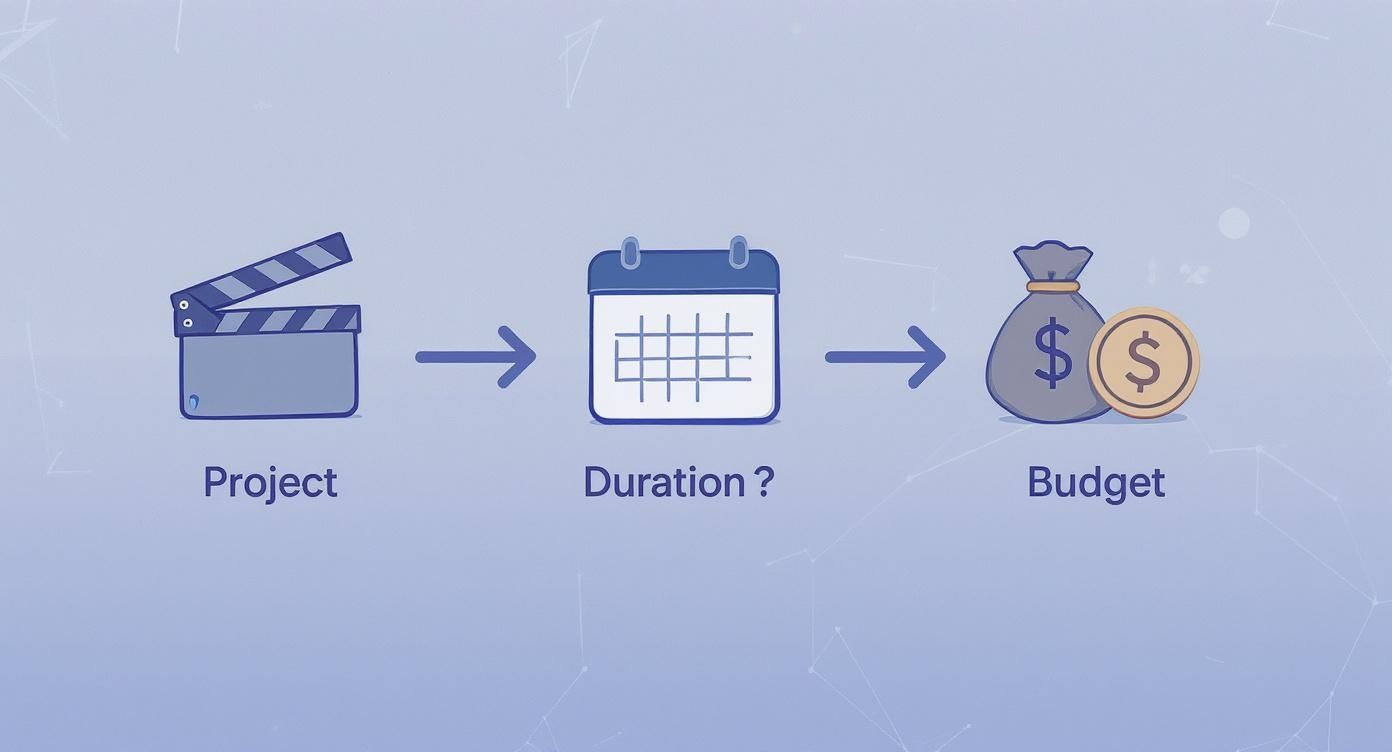
This simple breakdown shows how the duration and budget of your project are the two biggest factors in the hire-versus-buy debate, helping you make the most logical choice from the get-go.
From Briefing to Quoting
Your journey starts with a solid brief. This is your moment to get everything down on paper—the style, the era, the colour palette, and exactly how many of each item you need. The more detail you can give, the quicker a hire company can dive into their collection and find the perfect match.
Once you’ve got a shortlist of items, it’s time to ask for a quote. Any professional quote will give you a clear, itemised breakdown of the costs, which usually includes:
-
The Hire Fee: The core cost for renting the items, typically worked out on a weekly basis.
-
Delivery and Collection: The charge for getting the furniture to your location and taking it away again.
-
Damage Waiver or Insurance: A fee that covers you for accidental damage during the hire period.
Take a good look at the quote. It’s the financial roadmap for the hire, so you need to be sure it all fits within your production budget before you give the green light. A bit of diligence here prevents any nasty surprises later on.
Understanding the Hire Agreement
With the quote approved, you'll receive a hire agreement. This isn't just a formality to be skimmed over; it's a crucial document. Think of it as the script for your hire—it lays out everyone’s roles and responsibilities, detailing the full terms and conditions, payment schedules, hire duration, and cancellation policies.
A hire agreement isn't just red tape; it's a tool for clarity. It protects both you and the hire company by setting clear expectations from the outset, making sure everyone is on the same page.
Pay special attention to anything related to insurance. While a damage waiver offers some protection, you’ll almost certainly need your own production or event insurance in place. The agreement will specify the level of cover you need, so double-check it against your policy to make sure you're fully covered.
Mastering Logistics and Communication
Paperwork sorted, it’s all about logistics. This is where good, clear communication becomes your best friend. Don’t wait to be asked for information—get ahead of the game. Confirm delivery windows, provide an on-site contact with a mobile number, and flag any access restrictions right from the start.
Think about the potential hurdles. Are there narrow corridors, tight staircases, or tricky parking at the venue? Is there a lift, and if so, what are its dimensions? Giving the delivery team a heads-up about these details means they can plan ahead, preventing delays and stress on a busy shoot day. A smooth delivery really sets the tone for a successful hire.
This kind of partnership is becoming more and more important. The UK furniture rental market is projected to grow at a CAGR of 7.4% between 2025 and 2035, largely driven by this demand for seamless, integrated solutions. A well-managed hire process is key to this, fitting perfectly into the complex workflows of modern productions.
Understanding Furniture Hire Costs
Figuring out the cost of hiring furniture shouldn't be a mystery. A clear, straightforward quote means you can budget properly, compare your options without getting confused, and make smart financial decisions for your production. The whole process is usually pretty logical, designed to reflect the value of the pieces you’re hiring and how long you need them for.
At its heart, the pricing is often a simple calculation. Most prop houses charge a weekly hire fee that’s a set percentage of an item’s retail value. For example, a vintage armchair we value at £500 might have a weekly hire rate of 10%, which works out to £50 per week. This structure keeps things fair and ensures the price matches the quality and rarity of the piece you’re using on set.
What's Included in a Standard Quote
A standard quote gives you a clean breakdown of the main charges. While the exact layout might vary slightly between suppliers, you can expect to see a few key things itemised clearly. Think of this as your baseline cost, covering the essentials to get the props from our warehouse to your location.
Typically, you'll see:
-
The Itemised Hire Fee: This is the cost for each individual piece of furniture for the time you've agreed, usually calculated by the week.
-
Delivery and Collection Charges: A straightforward fee to cover the logistics of getting the items to you and picking them up again when you’re done. This is usually based on how far you are from us and the size of your order.
-
Damage Waiver Fee: A small, non-refundable charge that covers you for minor, accidental damage. It’s there for your peace of mind, protecting you from unexpected costs for the little scuffs and knocks that are inevitable on a busy set.
Potential Additional Costs to Consider
Sometimes, a job needs a little something extra that falls outside the standard agreement. Knowing what these potential extras are ahead of time helps you build a realistic budget and avoid any last-minute surprises. These costs almost always relate to non-standard logistics or special requests.
From my experience, the more detail you can give us upfront about logistical challenges, the more accurate our quote will be. It’s the best way to prevent unforeseen expenses cropping up later.
Be ready for possible add-ons like:
-
Out-of-Hours Service: If you need a delivery or collection outside of normal business hours—think late nights or weekends—there will likely be an extra fee to cover paying our crew for working unsociable hours.
-
Specialised Crew or Equipment: For tricky venues with lots of stairs or no lift access, we might need to bring in extra crew members or specialised moving gear. This will incur an additional charge.
-
Re-delivery or Wasted Journey Fees: If our crew turns up at the arranged time but can’t get into the venue, a fee may be charged to cover the failed trip and the cost of coming back again.
By giving your furniture hire company a really clear, detailed brief about your venue, schedule, and specific needs right from the start, you’re helping them give you the most precise quote possible. That upfront honesty is the key to a smooth partnership that runs on time and on budget.
Selecting and Styling Furniture for Productions
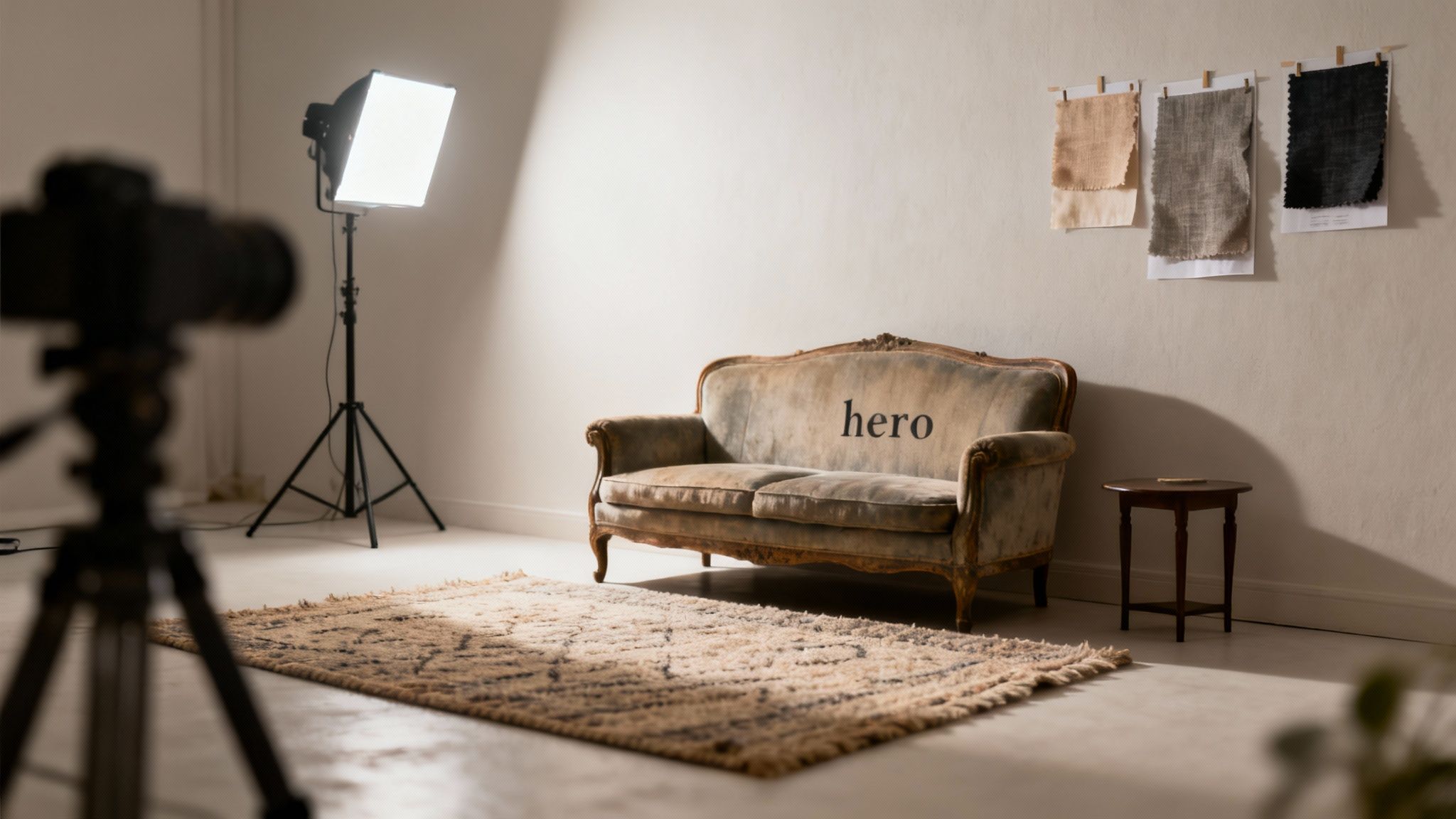
Once you’ve sorted the logistics, the real artistry begins. Choosing furniture for a production isn’t about just filling a space. It’s about visual storytelling. Every single chair, table, and lamp is a piece of the narrative, shaping the atmosphere, defining a character, and telling the audience where to look.
The right pieces can turn an empty studio into a specific time and place. A great set decorator or event stylist thinks like a storyteller, using furniture to build an immersive world from scratch. This is where furniture hire really proves its worth, giving you the building blocks to bring your creative vision to life.
Building Your Visual Narrative
Before you even glance at a catalogue, you need to be crystal clear on the story you’re telling. Are you creating a gritty 1970s detective’s office? A lavish Regency ballroom? A cold, minimalist art gallery? Each of these settings speaks a completely different visual language, and furniture is your vocabulary.
Here are a few core principles to keep in mind:
-
Historical Accuracy: For period pieces, getting it right is everything. You have to research the specific era to make sure the silhouettes, materials, and styles are correct. Just one out-of-place item can shatter the illusion for a keen-eyed viewer.
-
Character and Tone: The furniture should be an extension of the characters or the mood of the event. A well-worn leather armchair suggests a comfortable, perhaps studious, character. Sharp, metallic furniture can create a feeling of coldness and formality.
-
Camera Composition: In film and photography, furniture is a powerful compositional tool. You have to think about how an item’s scale, colour, and shape will work with the actors and the camera’s framing to create balanced, dynamic shots.
The Power of the Hero Piece
In any well-designed set, some pieces just naturally grab your attention. These are what we call 'hero' pieces—a sofa with a unique shape, an ornate throne, or a striking industrial coffee table. They act as anchors for the entire design, setting the tone for the scene.
A great approach is to build your set around one or two of these statement pieces. Once they’re in place, you can layer in more neutral, functional furniture that complements them without fighting for the spotlight. It prevents the set from feeling cluttered or visually confusing and is a simple but incredibly effective way to create maximum impact.
A well-chosen hero piece does more than just fill a space; it becomes a silent character in the story, communicating a wealth of information about the setting and its inhabitants without a single word of dialogue.
Combining Texture, Colour, and Scale
A truly immersive set engages more than just the eyes. Don’t just think about what the furniture looks like; think about how it feels. Mixing textures—like rough wood against soft velvet, or smooth leather next to cool metal—adds a huge amount of depth and makes a set feel real and lived-in.
Colour is probably your most powerful tool for setting the mood. Warm, earthy tones can create a sense of comfort and nostalgia, while cool blues and greys might feel more corporate or futuristic. Sticking to a consistent colour palette ties the whole design together for a cohesive, professional look.
Finally, don’t be afraid to play with scale. An oversized chair can make a character seem small and vulnerable. A cramped room stuffed with large furniture can create an instant feeling of claustrophobia. The relative size of your furniture is a subtle but powerful way to influence how the audience feels about the space and the story happening within it.
The demand for these carefully curated environments is only getting bigger. The UK furniture rental market is projected to grow at a steady CAGR of 10.89% between 2025 and 2033. This shows a clear shift towards professionally styled sets where every choice matters. You can learn more about this trend in the full furniture rental service market report. It’s why visiting a showroom to see and touch the items firsthand is so vital—it’s the only way to ensure your final choices perfectly match your creative vision.
Your Essential Furniture Hire Logistics Checklist
Any successful creative project comes down to getting the details right, and that absolutely includes the physical side of managing your hired furniture. A smooth delivery and collection saves you from costly delays and lets your team get on with their actual jobs without distraction. Think of this as your game plan – a way to map out the logistics and make sure every piece arrives and leaves exactly when and how it should.
By thinking through these key stages—before delivery, on the day, and after the hire—you can spot potential headaches before they happen. Honestly, a bit of foresight here is the difference between a seamless operation and a last-minute scramble.
Pre-Delivery Preparations
The work you do before our van even pulls up is easily the most important part of the process. Getting these details sorted sets the stage for a flawless drop-off, meaning the crew can get your items in safely and efficiently. Cutting corners here is usually what causes problems on the day.
Here's what you need to nail down beforehand:
-
Confirm Venue Access: Walk the route. Seriously. Double-check every doorway, corridor, and lift. Get a tape measure out for any tight squeezes and share the dimensions with us. It’s the best way to avoid any nasty surprises.
-
Secure Permissions and Parking: Does the venue need specific permits for deliveries? Have you sorted out a dedicated parking spot for the van? Getting this sorted in advance prevents delays and avoids the awkward conversation about parking tickets.
-
Prepare the Drop-Off Area: Designate a clear, secure, and easy-to-reach spot for the furniture. Make sure the space is clean, dry, and ready for the items to land without any obstructions.
On the Day of Delivery
When the furniture arrives, a clear plan makes for a quick and accurate handover. This is your chance to verify the order and formally take responsibility for the items, so having one designated person on point is crucial for keeping things under control.
On delivery day, your on-site representative is your most valuable asset. They are the crucial link between the delivery crew and the production team, responsible for ensuring what was ordered is what has arrived, and that it's in the expected condition.
Make sure your on-site contact is ready to:
-
Be Present and Reachable: They absolutely must be on-site at the agreed delivery time and have their phone on.
-
Inspect Every Item: They need to carefully check each piece against the delivery note, both for accuracy and to spot any pre-existing wear or damage. This is non-negotiable.
-
Sign the Paperwork: Once they’re happy, they'll sign the delivery note. This formally accepts the items and officially kicks off the hire period.
To make sure nothing gets missed, here’s a simple checklist to run through before our team arrives.
Pre-Production Logistics Checklist
| Task | Confirmation Status | Notes |
|---|---|---|
| Measure Access Points | ☐ Confirmed | Check all doorways, lifts, and tight corners. |
| Secure Venue Permissions | ☐ Confirmed | Are delivery permits required? |
| Arrange Vehicle Parking | ☐ Confirmed | Dedicated spot reserved and communicated. |
| Designate Drop-Off Area | ☐ Confirmed | Space is clear, safe, and accessible. |
| Assign On-Site Contact | ☐ Confirmed | Name and mobile number shared with us. |
| Brief On-Site Contact | ☐ Confirmed | They understand the inspection & sign-off process. |
Having these boxes ticked is the best way to guarantee a stress-free start to your hire.
Post-Hire Collection and Wrap-Up
Finally, a smooth collection is just as important as a smooth delivery. Getting all the items together and ready for pickup ensures you're sticking to the hire agreement and helps build a good relationship with your supplier for next time. For bigger jobs, like those we cover in our guide to prop hire for events, this final step is vital for an efficient wrap.
Make sure all the hired furniture is gathered back in the designated collection area, clean and in the same condition you received it. It’s a simple final step, but it guarantees your furniture hire experience ends on a professional, positive note.
Got Questions About Furniture Hire?
Even with the best plan in the world, a few practical questions always pop up. It’s completely normal. Getting clear, straightforward answers is the best way to move forward with confidence and make sure there are no surprises down the line. We’ve pulled together the most common queries we hear from creatives to give you the information you need for a smooth hire.
Think of this as the practical bit—the nuts and bolts that help you finalise your plans and get on with the creative work.
Who Is Responsible for Insurance?
In short: you are. While we do offer a damage waiver to cover the minor, accidental scuffs and scrapes that are part of life on a busy set, it’s not a substitute for proper production insurance.
Every client is required to have their own comprehensive insurance policy in place before the hire begins. This policy has to cover the full replacement value of all hired items against loss, theft, and significant damage.
This is non-negotiable, and for a very good reason: it protects everyone. Your production is safe from potentially huge replacement costs, and we know our collection is secure while it’s in your hands. Before you hire, always double-check your policy to make sure it covers the terms of the hire agreement.
Can I View Items Before I Hire Them?
Absolutely. In fact, we strongly encourage it. Online catalogues are fantastic for creating a shortlist and getting ideas, but nothing beats seeing a piece in the flesh. A visit to the showroom lets you properly appreciate the scale, texture, and true colour of the furniture.
This is especially important for set decorators and stylists who live and breathe detail. Popping in for a visit means you can:
-
Verify Condition: See for yourself the exact state of a vintage or antique piece.
-
Check Colours: Make sure the tones work with your palette under real light, not just on a screen.
-
Assess Scale: Get a real feel for how an item will fit and look within your set or venue.
Arranging a visit is easy—just get in touch with our team, and we’ll find a time that works for you. Seeing the items firsthand is often the final piece of the puzzle that confirms your selections are spot-on for the job.
Ready to find the perfect pieces for your next production? The expert team at House of Props is here to help you navigate our extensive collection and bring your creative vision to life. Explore our catalogue and request a quote today at https://www.houseofprops.uk.