A Director’s Guide to Chesterfield Wingback Chairs
More than a chair, the Chesterfield wingback is a silent actor. It’s a powerful piece of shorthand for visual storytellers, blending stately elegance with a kind of come-hither comfort. With one prop, you can instantly establish a character’s authority, ground a scene in a specific era, or create a pocket of intellectual warmth. That’s a lot of narrative weight for one piece of furniture to carry.
A Storytelling Powerhouse on Four Legs
For set decorators, prop masters, and directors, the Chesterfield wingback is more than just set dressing. It's a shortcut to character and context, doing the heavy lifting without a single line of dialogue. Its presence can turn a sterile room into a grand study, give a modern flat a sense of history, or carve out a corner sanctuary for deep thought. If you understand its design language, you unlock its full potential.
This guide is about moving beyond just placing a chair in a room. We’ll get into how you can use this classic piece to build authentic, visually compelling scenes—from spotting key design features to mastering how it looks on camera.
From Practicality to Prestige
The chair’s commanding presence didn't start as a style statement. It was a matter of survival. The Chesterfield wingback first appeared in the UK around the 17th century, born from a very practical need to fight off the notorious drafts in old British homes.
Those signature wings? They were there to shield the sitter from chilly air and trap warmth from the fireplace. Early versions were simple wooden frames, but they soon evolved into the fully upholstered, deep-buttoned, and stud-detailed icons we recognise today. It's a perfect example of classic British craftsmanship: embedding pure function within timeless elegance. You can find out more about its journey from practical necessity to design classic over at canonburyantiques.com.
A well-chosen Chesterfield wingback does more than fill a space; it populates it with history, personality, and an unspoken story. It suggests a life lived and a character with substance.
This guide is built to help you harness that power. We'll explore how to pick the perfect chair to enrich your story, making sure every prop choice adds another meaningful layer to your production.
How to Identify the Perfect Chair for Your Scene
Choosing the right Chesterfield wingback chair is a bit like casting an actor. Each one has its own personality and a backstory told through its design, materials, and the life it’s lived. When you learn to ‘read’ these details, you can pick a piece that adds a rich, unspoken layer to your narrative, making sure every prop choice is intentional.
Think of it like this: the deep, diamond-shaped button tufting isn't just decoration. It communicates a sense of gravitas and tradition. This makes it a perfect fit for a judge's chambers, a university professor's office, or the sitting room of a powerful matriarch. That deep buttoning creates shadow and texture that just looks spectacular on camera.
In the same way, the state of the upholstery tells its own story. A chair with flawless, glossy leather might suggest new money or meticulous care. On the other hand, one with cracked, worn leather speaks of a long and storied past. It could belong to a character with inherited wealth, an old academic, or a family with deep roots, instantly adding a sense of lived-in authenticity to the scene.
This infographic breaks down some of the core storytelling elements a Chesterfield wingback can bring to the table.
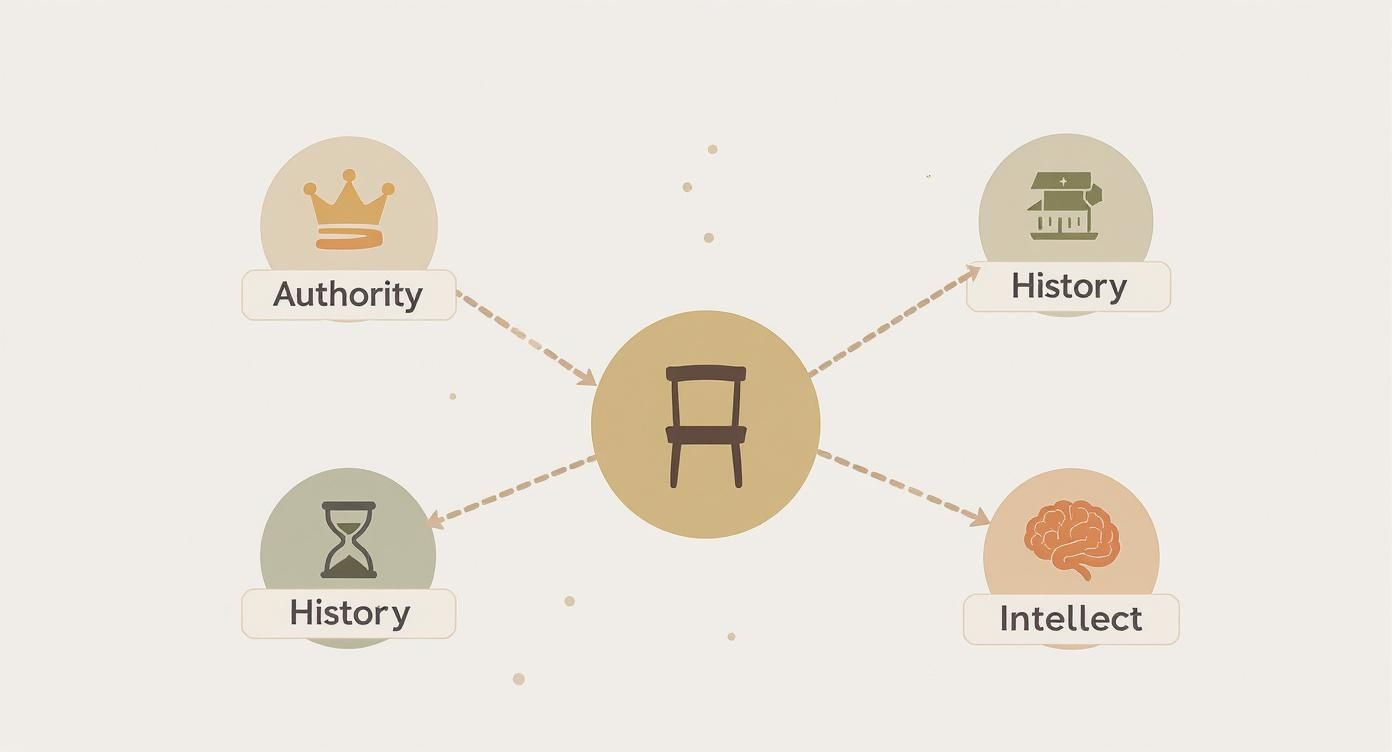
As you can see, the chair's visual language immediately gets across concepts of authority, intellect, and historical weight, making it an incredibly versatile tool for almost any scene.
Distinguishing Between Different Eras
To really master sourcing, you need to be able to spot the subtle differences between chairs from different periods. These clues are essential for maintaining historical accuracy and matching the prop to your specific setting. A heavy, ornate Victorian-era piece would feel jarringly out of place in a sleek, modern thriller, just as a minimalist mid-century design would clash with a period drama.
You can learn more about how to select props that align perfectly with your narrative in our comprehensive guide on how to choose props that enhance your story. It’s a great resource that offers broader insights to complement the specific details we’re covering here.
Here’s a quick reference table to help you spot the key features when you're sizing up a chair.
Key Identifiers of Chesterfield Wingback Chairs
| Feature | What to Look For | Significance in Design |
|---|---|---|
| Timber & Legs | Dark, carved mahogany or walnut vs. lighter, tapered oak or teak. | Heavier, darker woods point to Victorian/Edwardian eras; lighter, cleaner lines suggest a mid-century or modern influence. |
| Arm Style | High, deeply rolled arms vs. lower, sleeker, or more angular arms. | Classic rolled arms are the traditional Chesterfield hallmark. Modern interpretations often play with the arm height and shape. |
| Upholstery | Rich leathers and velvets vs. linens, bouclé, or other modern fabrics. | Traditional materials speak to older styles. A wider range of fabrics and colours usually indicates a contemporary piece. |
| Button Tufting | Deep, diamond-patterned tufting vs. shallow tufting or a plain back. | The iconic deep tufting is a classic feature. Less pronounced or absent tufting is common in modern updates to the design. |
These details are your cheat sheet for identifying a chair's period and character. Here’s a closer look:
- The Wood: Take a good look at the legs and any exposed frame. Darker, heavily carved woods like mahogany or walnut often point to Victorian or Edwardian designs. Lighter woods like teak or oak, with cleaner, tapered lines, suggest a more modern, mid-century influence.
- The Arms: The classic Chesterfield wingback has those generous, rolled arms, often the same height as the back. If you see sleeker, lower, or more angular arms, you’re likely looking at a contemporary interpretation of the classic design.
- The Upholstery: Beyond wear and tear, the material itself is a huge clue. Rich velvets or traditional leathers are common for older styles, whereas modern versions might use linen, bouclé, or other fabrics in a much wider range of colours.
By examining these elements—wood, arms, and upholstery—you move from simply choosing furniture to making a deliberate and informed directorial decision. Each detail contributes to the silent narrative of your set.
With this toolkit, you can confidently select the perfect Chesterfield wingback chair, ensuring it not only fills a space but also enriches the scene with its own unique and authentic voice.
Staging and Lighting for Cinematic Impact
Once you’ve found the perfect chair, the next job is to make it perform. On a film set, stage, or photoshoot, a Chesterfield wingback is never just a place to sit; it’s a powerful tool for visual storytelling. The way you position and light it can define a character's power, shape relationships between actors, and completely transform the mood of a scene.
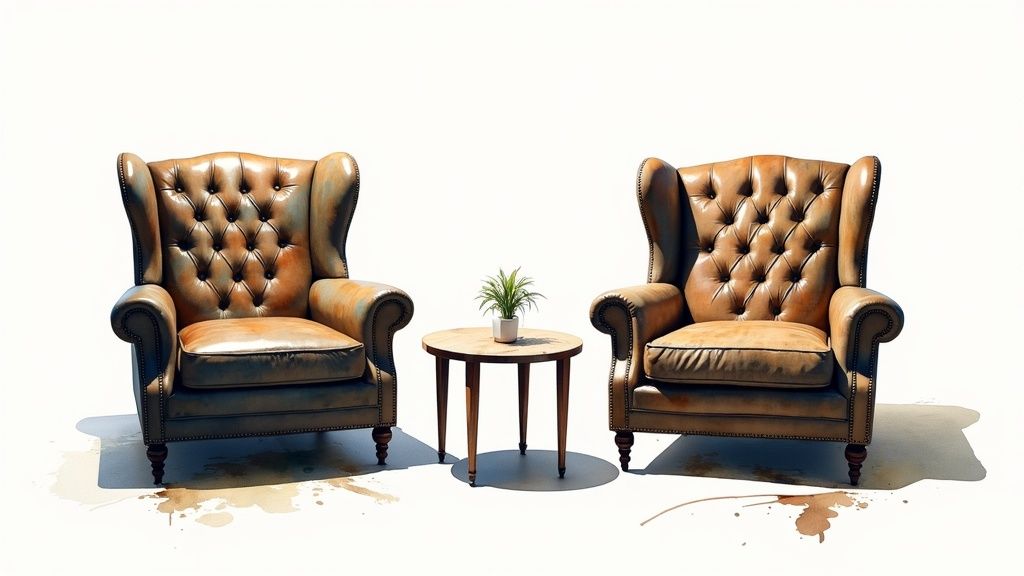
Your first creative decision starts with the scale of the chair itself. An enormous, imposing wingback instantly conveys authority, making a character physically dominate their space. On the other hand, a smaller, more compact chair can create a sense of intimacy or even vulnerability, pulling the audience right into a character's private world.
Positioning to Define Power and Relationships
Where you place the chair is just as vital as its size. You can subtly communicate complex character dynamics without a single word of dialogue just by being strategic. Think about how placement can drive the story forward:
- Establishing Authority: Stick a Chesterfield wingback at the head of a table or in the dead centre of a room, and you immediately signal leadership. Picture a CEO in their office or the head of a family in their study.
- Signifying Isolation: A single chair set apart from all the other furniture can visually scream loneliness, independence, or a character's intellectual distance from their surroundings.
- Creating Connection: Two chairs facing each other carve out an intimate space for dialogue. It's the perfect setup for a therapy session or a quiet chat between old friends.
This isn't just set dressing; it’s turning the chair into an active participant in the scene. You’re shaping how the audience sees the characters and their interactions, a fundamental trick used in countless films to build atmosphere and subtext.
Lighting to Create Mood and Drama
Now, lighting is where you really bring the chair to life on camera. The rich texture of a Chesterfield wingback—especially its deep button tufting and worn leather—is an absolute playground for light and shadow. The right lighting can turn a simple piece of furniture into a focal point with huge dramatic potential.
A prop is only as powerful as the light that reveals it. For a Chesterfield wingback, light can sculpt its form, deepen its character, and amplify its role in the story.
Take low-key lighting, for example. Using a single, strong light source will cast dramatic shadows across the upholstery, which is perfect for building mystery or suspense in a thriller. The deep recesses of the tufting become dark pools, adding texture and a foreboding feel.
Conversely, you can achieve the complete opposite with soft, warm lighting. Diffused light that wraps around the chair highlights its inviting curves and rich colour, creating a welcoming, comfortable mood. This is your go-to for scenes in a cosy library, a family home, or any space meant to feel safe and secure. By getting a handle on these techniques, you can control the emotional tone of a scene and make sure your Chesterfield wingback chairs are contributing powerfully to the final shot.
Getting Your Props from Warehouse to Set in One Piece
Finding that perfect Chesterfield wingback is a great start, but it's only half the job. Getting it from the prop house to your set in pristine condition is where the real professionals stand out. A solid hire process is your best defence against delays, safety issues, or those dreaded continuity errors that can derail a shoot. Your first move, always, should be a hands-on condition check. This isn't just about looking for a few scuffs; it's about checking the chair's bones.
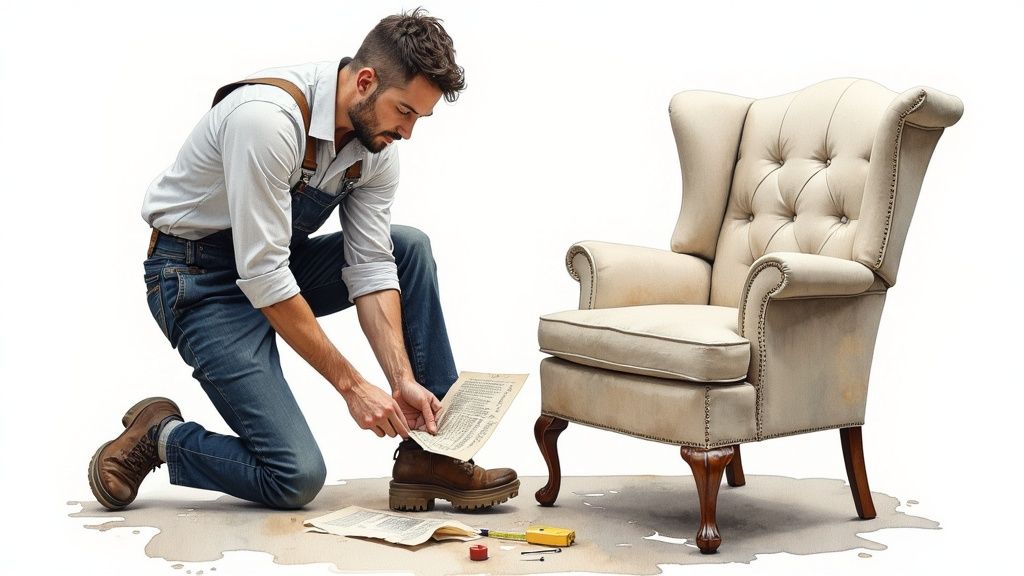
This is a critical safety measure, not just a cosmetic once-over. Actually sit in the chair. Give it a gentle rock. Listen for any creaks or wobbles that might signal a loose joint. This is especially vital for genuine period pieces, as their age can hide structural weaknesses you won't spot just by looking.
The Essential Condition Checklist
Before any prop leaves our warehouse, we run it through a systematic inspection. This makes sure the piece isn't just visually right for the scene, but also completely safe for your actors to use. A thorough check saves everyone from on-set surprises and protects both your cast and the prop itself.
Here's what you should be focusing on:
- Structural Stability: Press down firmly on the arms and back. Make sure all the legs are even and the frame feels solid. Any instability is a major red flag for actor safety.
- Upholstery Wear and Tear: Get up close with the fabric or leather. Look for any rips, stains, or loose buttons. You need to note any existing damage to avoid being held responsible for it later, and more importantly, to keep your visual continuity spot-on between scenes.
- Springs and Cushioning: Have a seat. Can you feel any broken springs or collapsed padding? A sagging, uncomfortable chair can subtly throw off an actor's performance and posture.
- Legs and Feet: Check the feet for any scuffs or damage that could potentially scratch up your set flooring. If the chair has castors, make sure they run smoothly, especially if it needs to be moved during a scene.
Prop Safety and Handling on the Move
Once you've given the chair the green light, having clear handling protocols is non-negotiable. This is what keeps it safe during transit and on a busy set. Damage doesn't just hit your budget; it can bring production to a grinding halt if a hero prop becomes unusable. Always insist on protective blankets and secure straps during transport.
A prop's journey from the hire house to the set is its most vulnerable moment. Proper handling isn't just about protecting the furniture; it’s about protecting the integrity and schedule of your entire production.
The sheer quality and craftsmanship of these chairs is no secret. Here in the UK, customer satisfaction is incredibly high, with some sellers reporting average ratings of 4.8 out of 5 stars. That's often down to top-notch materials like genuine leather and solid mahogany feet, but even the sturdiest chair is vulnerable to damage if it's not handled with care. To get a better sense of what goes into these pieces, you can find great insights on British craftsmanship and consumer reception. And for a deeper look into managing your props effectively, don't miss our guide on DIY vs professional prop hire.
Collaborating with a Prop House for a Perfect Match
Finding the perfect chesterfield wingback chairs for your production is one thing, but getting them on set, on time, and on budget is another. The most efficient way to get it right is to partner with a professional prop house. A bit of prep work on your end can make the whole process incredibly smooth.
Before you even pick up the phone, try to gather the key details. Knowing your set dimensions, the specific look you’re chasing, and your production timeline will focus the conversation from the very start. Are you shooting a dark, moody period drama or a bright, contemporary advert? Each demands a chair with a completely different personality.
Collaborating with a prop house isn't just a transaction; it's a creative partnership. Their expertise can elevate your set design from good to unforgettable by suggesting pieces you might not have considered.
Having that clarity helps the prop house team get inside your vision and recommend pieces that tick both the creative and logistical boxes. It means you can move quickly and decisively, which is everything when you're up against a tight production schedule.
Streamlining the Hiring Logistics
Once you've got a shortlist, the conversation needs to shift to logistics. This is the time to nail down turnaround times and delivery requirements. Getting these details sorted early stops any nasty surprises down the line and ensures your chosen chair arrives on set exactly when it needs to be there.
This is also the moment to tap into the real value a prop house offers: their expertise. The stylists are an incredible resource. They can do much more than just check if a chair is available; they can suggest other props that will make your scene complete. Maybe a certain side table, a vintage lamp, or a well-worn rug is all that’s needed to perfectly complement your chosen Chesterfield wingback.
For an idea of a classic piece that slots into almost any setting, take a look at our own versatile Chesterfield Wingback Chair hire option.
Building a Successful Partnership
When you approach a prop house with clear requirements but an open mind, you’re laying the groundwork for a great hire. It’s a collaboration that saves time, cuts down on stress, and ultimately makes your set more authentic and visually powerful. The trick is to communicate what you need, but stay open to what their experience can bring to the table.
Follow these simple steps for a process that just works:
- Prepare Your Brief: Get your dimensions, style references, and timeline ready to go.
- Discuss Logistics Early: Lock in availability, delivery schedules, and return procedures.
- Ask for Creative Input: Let the stylists suggest complementary items to perfect the look.
Taking these steps turns hiring from a chore into a creative conversation, helping you find that perfect match every single time.
A Timeless Legacy in Film and Theatre
So, we’ve traced the Chesterfield wingback’s remarkable journey, from its humble, practical origins in draughty British manors to its modern-day status as a design icon. But it’s so much more than just a piece of furniture. In the world of visual storytelling, this chair is a strategic asset, capable of defining a character or setting the entire tone of a scene with its powerful presence.
This guide was designed to give you the practical knowledge to spot the key features, stage it for maximum impact, and hire one with total confidence. If there’s one thing to take away, it’s this: don’t just see it as a prop. See it as a powerful tool for enriching your narrative. The weight of its design heritage can add layers of depth and authenticity to any project you’re working on.
A Symbol of British Craftsmanship
The legacy of Chesterfield wingback chairs is still very much alive in the UK’s modern furniture market, where they remain premium, handcrafted items. Their value as luxury pieces is clear, with antique pairs often fetching anything between £590 and £19,500, all depending on their condition and history. Contemporary British makers carry this tradition forward, often sourcing materials locally and building each chair by hand, which you’ll see reflected in their value. You can find out more about the heritage and pricing of these iconic chairs to get a feel for the market.
By leaning on the powerful design heritage of the Chesterfield wingback, you transform a mere object into a silent narrator, adding layers of depth and authenticity to your creative vision.
This deep-rooted commitment to quality ensures that whether you’re sourcing a genuine vintage piece or a modern classic, the chair brings an immediate sense of history and substance to your set. It’s a shortcut to character.
Your Questions, Answered
When you're bringing a classic piece like a Chesterfield wingback onto a set, you're bound to have a few questions. It’s a statement piece, after all. Over my 30 years in the prop business, I've heard them all. Here are some straight answers to the most common queries I get from production teams.
Let's clear up the practicalities so you can feel confident, from the first scout to the final shot.
How Much Space Do I Realistically Need for These Chairs?
This is a big one, and a common mistake is to underestimate their presence. A traditional Chesterfield wingback isn't just a chair; it's a piece of architecture. With its high back, sweeping wings, and deep, comfortable seat, it demands more floor space than your average accent chair.
As a rule of thumb, budget for at least a 1 metre by 1 metre footprint for each chair. And that's just the chair itself. You'll want to leave plenty of room around it for actors to move naturally and for the camera to get the shots it needs, especially if it's a key part of a busy scene.
Can We Use These Chairs for Stunts or Action Scenes?
In almost all cases, that’s a hard no. A genuine vintage Chesterfield wingback chair is a piece of history. It was built by hand, with a solid frame designed to last a lifetime of sitting, not a few seconds of screen-time chaos. They are simply not built for the stress of a fight scene or being thrown across a room.
If your script calls for a chair to be broken, tossed, or used in any kind of high-impact action, you absolutely must flag this with us. We can often source a modern replica built to take a beating or even a specially-made "breakaway" version. It’s all about protecting the actors, preserving the props, and avoiding any nasty surprise charges on your final invoice.
The golden rule of prop hire is simple: if it needs to do more than just sit there and look good, you have to tell your supplier. It saves everyone a lot of headaches.
Are Leather and Velvet a Nightmare to Light?
Not a nightmare, but they definitely need a bit of thought. Lighting these chairs is where the magic happens, and each material plays by its own rules.
- Leather: A glossy, aged leather can easily catch direct light and create distracting "hot spots" or glare. The trick is to use soft, diffused light. Think softboxes or bouncing light off a nearby surface. This approach softens the reflections and brings out that gorgeous, rich patina without blinding the camera.
- Velvet: This material is the opposite – it loves to soak up light. Lit from the front, it can look flat and lose all its beautiful texture. To make it pop, you need to light it from the side or use a subtle backlight. This will catch the pile and give it that luxurious sheen and depth you're looking for.
Ready to find the perfect prop for your next production? House of Props has over 30 years of experience supplying television, film, theatre, and creative projects with distinctive, high-quality props.
Explore our collection and bring your creative vision to life by visiting us at https://www.houseofprops.uk.
Article created using Outrank