
Sofas for Rent Your Guide to Event Seating
For anyone in production, events, or photography, the right piece of furniture isn't just a prop; it's a storyteller. It sets the tone, defines a space, and can make or break a shot. But buying a sofa for every single project? That’s not just impractical; it’s a fast track to a storage and budget nightmare.
Renting gives you instant access to a massive range of styles—from vintage Chesterfield to sleek modern minimalist—without the headache of ownership. It’s about gaining total creative freedom with zero logistical baggage.
Why Renting Sofas Is Your Smartest Move
Let's be honest, building your own collection of furniture to meet every potential brief is impossible. One week you need a classic Victorian chaise longue for a period drama; the next, it's a sharp, contemporary sofa for a corporate shoot.
This is where hiring comes in. It turns a massive logistical problem into a simple, on-demand solution. You get the perfect piece, right when you need it, and then it’s gone. No storage costs, no transport dramas, no maintenance. Just the right sofa for the job.
The Power of Creative Freedom
Hiring frees you from the compromises that come with owning a limited collection. You’re not stuck trying to make that one sofa you bought ‘work’ for the fifth time. Instead, you can dive into a huge catalogue of sofas for rent and pick the exact piece that matches your creative vision.
This agility is everything in the fast-paced creative world where aesthetics are king. You get the look you want, every time, without fail. This move towards access over ownership isn't just happening in our industry, either. It reflects a wider cultural shift, especially among younger generations who value experiences and flexibility—a mindset that perfectly mirrors the needs of production professionals.
It's About More Than Just Saving Money
While the cost savings are obvious, the real value of renting goes much deeper. Think about all the hidden burdens of owning large furniture:
-
Storage: Where on earth do you keep a dozen sofas when they’re not on set? That space costs money.
-
Transport: Shifting bulky furniture isn’t a one-person job. It needs proper vehicles, crew, and planning.
-
Maintenance: Sofas need to be kept clean, repaired, and camera-ready. That’s time and effort you don't have.
Renting rolls all these problems into one straightforward service. It’s not just about what you save on your balance sheet. It’s about saving your time, your energy, and your sanity—resources far better spent on the creative side of the project.
Defining Your Vision Before You Rent
Before you even think about flicking through a catalogue, the most important work happens. A great sofa rental doesn’t start with the furniture; it starts with a rock-solid vision. Nailing down your creative and practical needs first is what separates a smooth hire from a last-minute panic.
Think of yourself as a set decorator, even if you’re planning a corporate event. The sofa isn't just a place for people to sit. It’s a centrepiece that tells a story. What’s the theme? Are you building a moody, vintage atmosphere that screams for a leather Chesterfield, or a bright, optimistic vibe that needs a modern linen settee? Your choice has to support the narrative.
Choosing the Right Style and Material
A crucial lesson I've learned over the years is that a sofa’s colour and fabric look completely different under professional lights. A deep, dark velvet can soak up light and create dramatic, moody shadows, which is fantastic for a thriller but terrible for a light-hearted chat show. On the other hand, a light-coloured cotton can brighten up a scene beautifully, but it will also show every single shadow and crease.
The texture on camera is just as important. A plush, high-pile fabric gives an instant sense of luxury and comfort. Sleek leather, however, suggests sophistication or a tougher, more industrial feel. Getting this right is a huge part of visual storytelling, and if you need a deeper dive, there's a great prop master's guide on how to choose props that enhance your story.
This whole rental process might seem complex, but it really boils down to three key pillars: creative freedom, logistical simplicity, and stylistic variety.
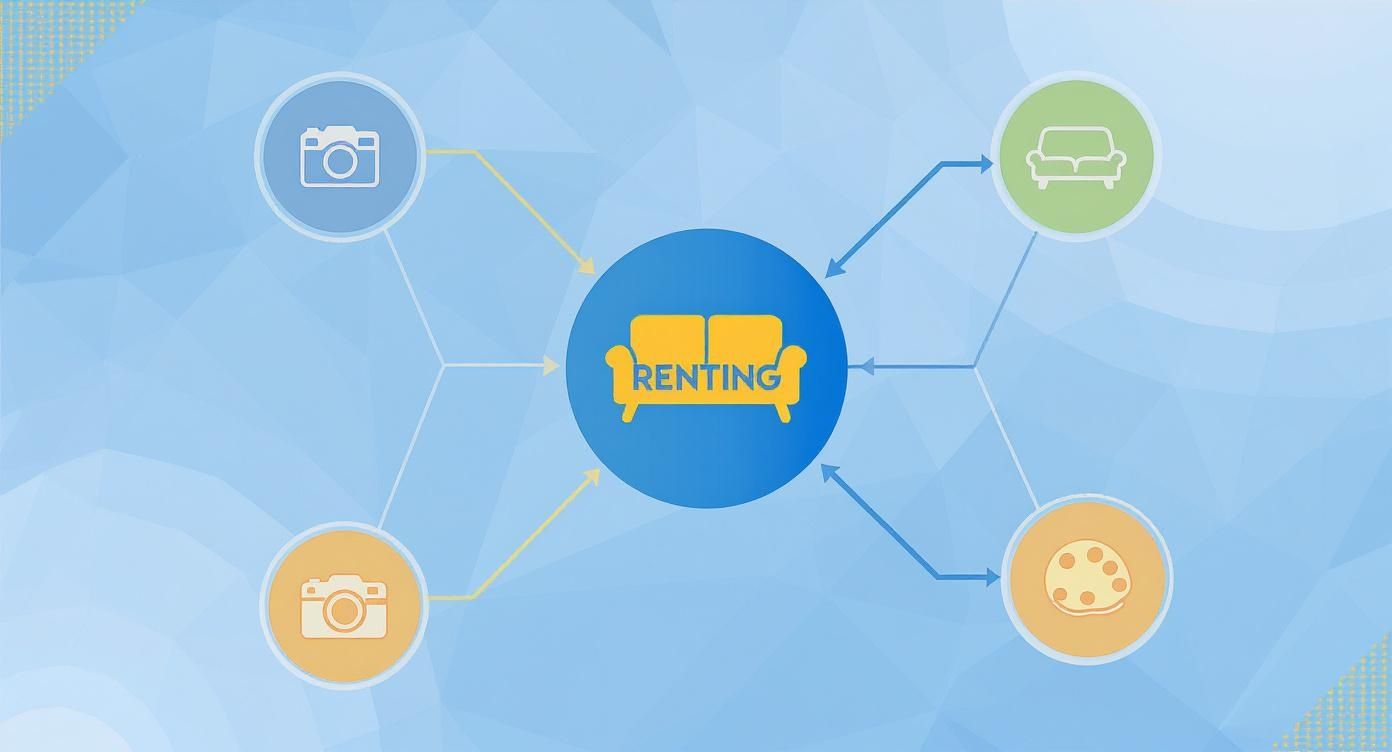
Thinking about it this way shows why renting is such a powerful choice. You're not just getting a piece of furniture; you're accessing a flexible solution for your creative project.
Measure Twice, Rent Once
I’ve seen it happen more times than I can count. A production falls in love with a stunning three-seater sofa, books it, and on the day, it won’t fit through the door. Logistical nightmares almost always start with a tape measure left in the toolbox.
You have to confirm it can physically get into your space. And I don’t just mean the room it’s going in; I mean the entire journey from the delivery truck to its final spot on set.
The rookie mistake is measuring the room but forgetting the route. A sofa that fits the set is completely useless if it’s stuck in the building’s lobby or wedged in a narrow staircase.
Before you sign anything, get your tape measure out and check these non-negotiables:
-
Doorways: Every single one on the delivery path. Check both height and width. Don't forget any interior doors.
-
Corridors and Hallways: Look for tight corners, low-hanging light fixtures, or pinch points that could block access.
-
Stairwells: Measure the width, the lowest point of the ceiling, and any awkward landings. This is where most deliveries fail.
-
Lifts: You need the internal dimensions—width, depth, and height—and, crucially, the weight capacity.
This simple checklist is your best defence against delivery-day disasters. Taking a proper 15 minutes to measure up front will save you hours of stress and the potential extra costs of a failed delivery attempt. Get this right, and everything else becomes so much easier.
Understanding Rental Costs and Agreements
Let’s be honest, the financial and legal side of hiring furniture can feel a bit like navigating a minefield. But it doesn’t have to be. Getting your head around the costs and the rental agreement is the key to keeping your budget on track and protecting your production.
When you ask for a quote for sofas for rent, you’re not just buying a product off the shelf. You’re investing in a service that includes the item, the logistics, and the peace of mind that it’ll be there when you need it. Think of the quote as the blueprint for that service – it should map out every single cost, leaving no room for nasty surprises down the line.
Breaking Down a Typical Rental Quote
A good, transparent quote tells you the whole story. Before you sign anything, make sure you can clearly spot these key components:
-
The Hire Fee: This is the base cost for the sofa itself, usually charged per day or per week. For longer shoots, a weekly rate almost always works out to be better value.
-
Delivery and Collection: This covers the logistics of getting the sofa from the warehouse to your location and back again. The price tag here can shift based on distance, how easy the access is (think stairs vs. a ground-floor loading bay), and the time of day.
-
Damage Waiver or Insurance: Many hire companies will offer this, and sometimes it's mandatory. It’s basically a small fee that covers you for accidental damage—a very sensible idea on a busy, unpredictable set.
-
VAT: The classic budget-killer. Always, always check if the prices you’re looking at include or exclude VAT. Finding out at the last minute can throw your entire budget off balance.
The single biggest mistake I see people make is underestimating the combined cost of delivery and collection. Always get a single, all-in figure for transport so you can see exactly how it stacks up against your total budget.
Decoding the Rental Agreement
Once you’re happy with the numbers, it’s time to look at the rental agreement. This isn't just bureaucratic paperwork; it’s the formal contract that lays out what’s expected from both you and the hire company. Treat it as your guide to a smooth, hassle-free hire.
Pay very close attention to any clauses about the damage policy. This is where you’ll find out what happens if a sofa gets stained, torn, or broken. It defines the difference between normal wear and tear (which is expected) and chargeable damage.
Also, keep an eye out for insurance requirements. You might need to show proof of your own production or public liability insurance. Understanding these terms before you sign means you can ask the right questions and walk onto set fully prepared.
Mastering Logistics for a Smooth Rental
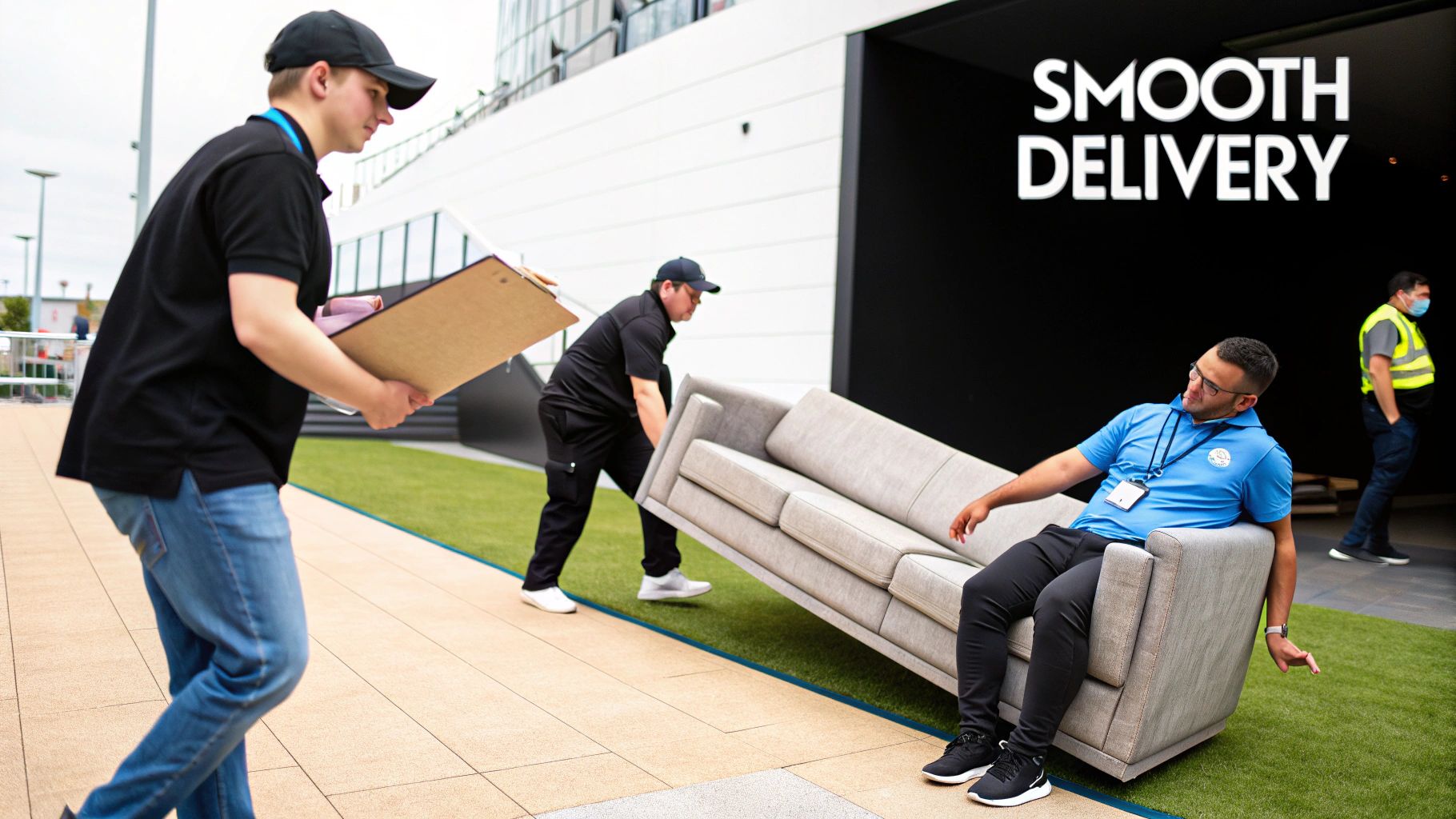
All the creative planning in the world can fall apart if the logistics aren't watertight. The delivery and collection process is where your vision meets reality, and getting it right is the difference between a smooth shoot and a stressful one. When you're dealing with sofas for rent, a seamless handover isn't just a nice-to-have; it's a professional necessity.
Logistical planning should kick off the second you confirm your booking. That means getting on the phone with the venue or location manager straight away. They need to be in the loop on delivery and collection times, know where the designated loading areas are, and tell you about any site rules that could trip up the delivery team.
You also need to walk the route in your mind—from the delivery lorry to the final spot on set. A clear, unobstructed pathway is non-negotiable. That means propping doors open, clearing out hallways, and getting some dust sheets or temporary coverings down to protect the floors from scuffs and scratches.
On-Site Coordination and Inspection
Having one dedicated point of contact on-site for the delivery is absolutely essential. This is the person responsible for meeting the crew, showing them exactly where to go, and signing off on the delivery note. Without this, chaos can quickly set in, leading to expensive delays.
As soon as the sofa arrives, and before the delivery team leaves, you need to conduct a thorough inspection with a member of their crew. This is your moment to document its condition.
Think of this initial check as your project’s insurance policy. Note any pre-existing marks, scuffs, or general wear and tear, and take clear photos on your phone. This simple ten-minute task can prevent any disagreements over damages down the line.
This step protects both you and the rental company, creating a crystal-clear record of the item's state at the start of the hire. If you're juggling lots of different items, our guide on prop hire for events has some broader tips for coordinating complex deliveries.
Scheduling Your Delivery and Collection
A solid timeline prevents logistical headaches, especially on a busy set or at a packed event. Pinpoint scheduling ensures the sofa turns up exactly when you need it and is collected promptly afterwards, keeping your entire project moving.
Here’s a simple timeline to help you plan:
-
7-10 Days Before: Confirm the delivery date, time window, and address with the rental company. Give them the name and mobile number of your dedicated on-site contact.
-
2-3 Days Before: Reconfirm all the access details with your venue. Double-check that pathways are clear and any necessary permissions or parking permits for the delivery vehicle are sorted.
-
Day of Delivery: Your on-site contact should be ready at least 30 minutes before the scheduled arrival. They’ll be there to greet the team, oversee placement, and carry out that all-important condition check.
-
Day of Collection: Make sure the sofa is back in its original condition (minus reasonable wear), clear of any stray props or personal items, and easy for the collection crew to get to at the agreed time.
Following a structured approach like this turns a logistical challenge into a straightforward, professional process. It frees you up to focus on what you do best—the creative side of your project.
Styling and Safety for Your Rented Sofa
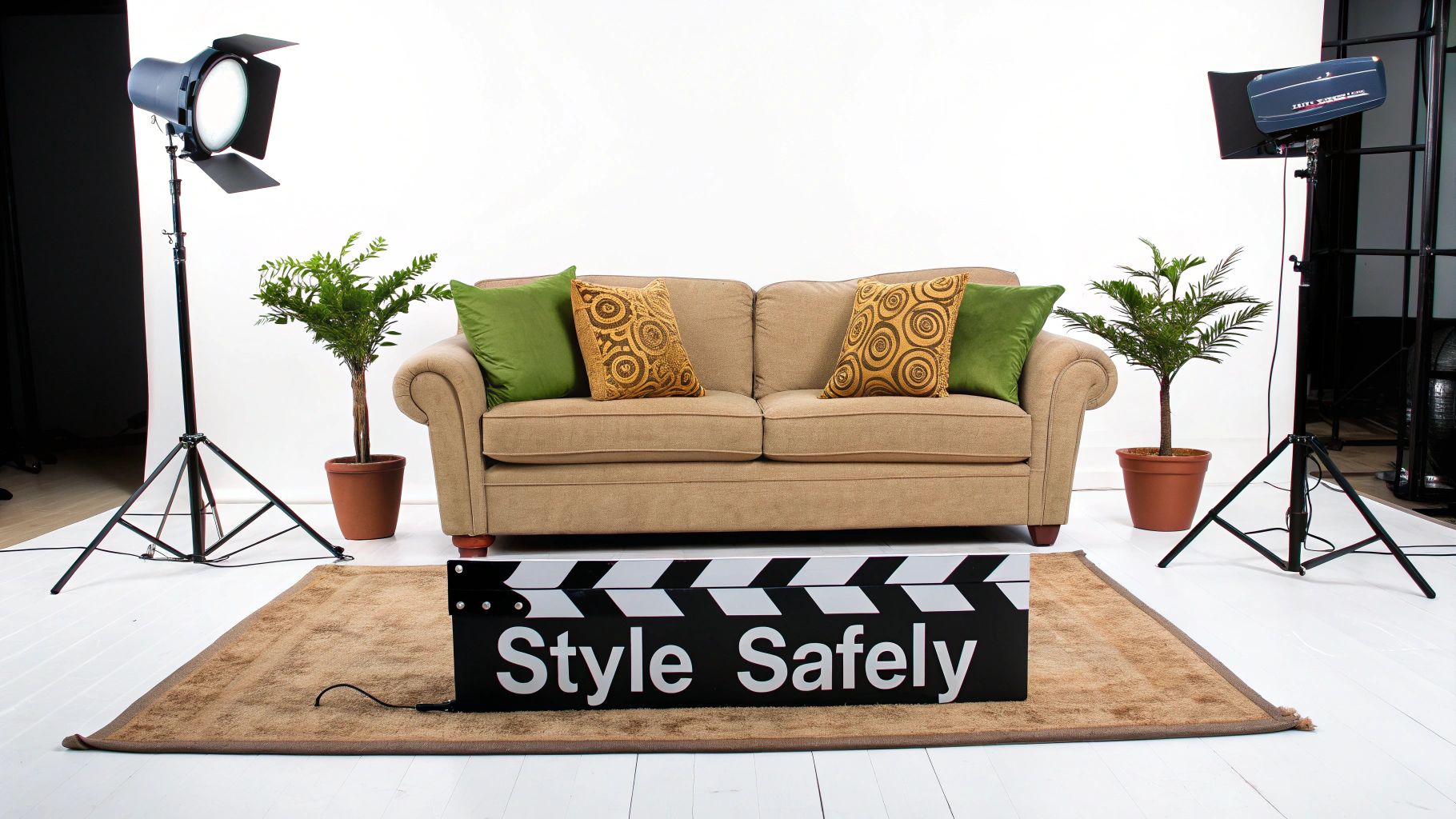
Once the sofa is in position, the fun part begins. This is where you transform a piece of furniture into a character, a mood-setter, or a crucial part of your scene’s story. Styling is all about adding those final, creative layers, but it’s a delicate dance – one that respects the rental agreement you’ve signed.
The aim is to enhance, not permanently alter. Think in terms of non-permanent additions: cushions, throws, and carefully chosen props. These simple elements can completely pivot a sofa's personality, injecting colour, texture, and context without leaving a single mark on the upholstery. A lush velvet cushion can signal luxury; a chunky knit throw suggests cosiness and comfort.
This kind of flexible furnishing is becoming a go-to for creative professionals. The UK market for sofas for rent and other furniture hire is booming, with revenues expected to jump from roughly USD 2,380.1 million in 2022 to a massive USD 4,258.6 million by 2030. This surge is fuelled by creative industries needing adaptable, high-quality pieces for projects that are here today, gone tomorrow. You can get a deeper dive into the UK furniture rental market growth and see the trend for yourself.
Balancing Aesthetics with Responsibility
While styling is where the vision comes to life, safety is non-negotiable. On any set or at any event, the well-being of your cast, crew, and guests always comes first. A beautifully dressed sofa is pointless if it introduces a hazard.
Before anyone sits down, run through a few quick but essential safety checks:
-
Stability: Give it a gentle rock. Is it solid on the ground? This is especially critical on temporary event flooring or uneven location surfaces.
-
Clearance: Check the space around it. The sofa must never block fire exits, main walkways, or essential access routes for crew and equipment.
-
Prop Safety: Are the props you've added secure? Lamps, vases, or any other decorative objects on or near the sofa shouldn't pose a risk of toppling over.
Your responsibility extends beyond the creative brief. A safe set is a professional set. Taking a few moments to check these simple things protects everyone and keeps your project running without a hitch.
Styling Tips That Respect Your Rental Agreement
You don't need to risk your deposit to create a stunning look. Focus on temporary, reversible techniques that deliver maximum impact without leaving a trace.
-
Layer Up with Textiles: A well-placed throw or blanket can introduce new colours and patterns in seconds. Draping one over the back or arm of a sofa can also soften its lines and add instant visual interest.
-
Add Character with Cushions: This is the easiest win. Mix and match cushion sizes, shapes, and textures to build depth and tie the sofa into your overall colour scheme.
-
Use Protectors (Discreetly): If your scene involves anything that could stain—food, drinks, fake blood—get ahead of the problem. A clear protective cover can be hidden from most camera angles, or a strategically draped throw can do the same job while adding to the look.
By pairing thoughtful styling with a professional's eye for safety, you ensure your hired sofa is both a beautiful centrepiece and a responsible choice for your production.
Your Essential Sofa Rental Checklist
Alright, let's pull all this theory into a practical, step-by-step plan. Think of this as your project management cheat sheet for every single sofa hire, designed to stop small details from becoming big headaches down the line.
Running through these stages methodically is the difference between a smooth, professional hire and a last-minute scramble. From the initial spark of an idea to the final sign-off, this is how you keep your project on track, on time, and on budget.
Pre-Booking and Planning Phase
Get this bit right, and everything else falls into place. This is where you do your homework. Rushing the planning stage is almost always a false economy that leads to costly mistakes or compromises later.
-
Nail Down Your Creative Vision: Before you even think about browsing, get your theme, colour palette, and overall aesthetic locked in. A mood board isn't a luxury; it’s a crucial tool to keep your selection focused.
-
Measure Everything. Twice. Get your tape measure out and record the dimensions for the venue space itself, plus every single doorway, lift, corridor, and stairwell on the access route. Look out for tight corners or low-hanging ceilings – they’re the classic culprits.
-
Shortlist and Enquire: Now you can start browsing rental company websites and pulling together a shortlist of sofas that fit your vision and your measurements. Send out enquiries with your dates, location, and a link to that mood board you made.
-
Review the Paperwork: When the quotes come in, compare them carefully. Look beyond the headline hire fee and check the delivery costs, damage waiver details, and VAT. Most importantly, read the rental agreement properly, paying special attention to the damage policy.
Booking and Logistics Coordination
Once you’ve chosen your supplier and your sofa, the job shifts from creative to coordination. This is all about locking in the details and making sure the physical journey from warehouse to venue is seamless.
A well-managed logistics phase is what separates a sofa that arrives on time and without fuss from one that causes a full-blown production delay. Clear, consistent communication is your best friend here.
This phase is more critical than ever, especially as hiring furniture becomes the norm. In the UK, the residential furniture rental market, which includes sofas for events and productions, already makes up a massive 65-70% of the total demand. It’s a clear sign that the industry is moving away from buying and towards the flexibility of hiring. You can read more about the drivers behind the UK's furniture rental services market.
Sample Sofa Rental Project Timeline
To help you stay ahead of the game, it’s useful to visualise how these steps fit into a typical production timeline. A bit of forward planning prevents any last-minute panic.
This table breaks down the key milestones for a standard sofa rental project.
| Phase | Timeline Before Event | Key Actions |
|---|---|---|
| Planning | 4–6 Weeks | Define vision, measure the space, research suppliers, create a shortlist. |
| Booking | 3–4 Weeks | Request detailed quotes, review all agreements, confirm the booking. |
| Logistics | 1–2 Weeks | Firm up delivery/collection times, coordinate access with the venue. |
| Final Checks | 2–3 Days | Reconfirm the on-site contact person, do a final check of access routes. |
| Execution | Event Day | Inspect the sofa as soon as it arrives, style it, and perform safety checks. |
| Wrap-Up | 1 Day After | Ensure the sofa is clean, ready for collection, and properly signed off. |
Following a loose structure like this helps ensure nothing gets missed, especially when you’re juggling dozens of other production elements at the same time.
Your Sofa Hire Questions, Answered
Hiring props for a living means you get asked the same questions a lot, especially when it comes to big, bulky items like sofas. Getting the answers sorted early on is the key to a shoot day that runs like clockwork instead of chaos. Here are some of the most common queries we get from production teams about our sofas for rent.
One of the first things people want to nail down is the hire period. Can you get a sofa for just one day? Absolutely. For fast-moving jobs like a photoshoot or a weekend event, we have daily and weekend rates. But if you’re dressing a set for a longer film production or a theatre run, weekly or monthly terms make more sense. Always get clarity on the minimum period and what it costs to extend before you sign on the dotted line.
Handling On-Set Issues
The next big worry is always damage. What happens if someone spills a coffee or a piece of equipment scuffs the upholstery? Your rental agreement is your go-to guide here; it’ll spell out the damage policy in black and white. The standard procedure is to report any mishaps to us immediately.
Depending on the contract and whether you’ve taken out a damage waiver, you might be responsible for repair or replacement costs.
This is exactly why you should never, ever skip the delivery inspection. Get your phone out, take timestamped photos of any pre-existing wear and tear, and email them over. It's the simplest, most effective way to protect your production from being blamed for damage you didn't cause.
Sourcing and Returns
What if the perfect sofa isn’t in the online catalogue? Don't just give up – ask us. Any decent prop house has an extensive collection and a network of contacts to help track down specific pieces. Send over your mood board and specs; a quick chat can often unearth exactly what you need.
Finally, we often get asked about cleaning. The good news is, you’re not expected to get the steam cleaner out. A standard professional cleaning fee is usually built into the hire cost. That said, we do expect it back in a respectable state – free of excessive dirt, leftover food, or set debris. Just double-check your agreement for the specific return conditions to avoid any surprise charges.
At House of Props, we believe in clear, straight answers and a rental process that just works. Take a look at our hand-picked collection of sofas and find the perfect piece to bring your set to life.